


The fastest way to fix a leaking roof is to trace the leak back to its real source, since the damp patch on your ceiling rarely sits directly below the actual gap. Clear away any debris from the affected area, apply a temporary seal such as roofing cement or waterproof tape, and protect the room below with a bucket and towels. This limits the damage, but it will not fix the underlying cause, so a lasting repair still needs a proper inspection from experienced roofers in Trowbridge.
In this guide, we will walk through how to spot the warning signs of a roof leak, trace it back to its source, what you can safely do as a temporary fix, and when it is time to call a roofer instead of continuing to patch it yourself. We will also cover roofing materials common on Trowbridge homes, roughly what a proper repair costs, and how to prevent the same leak from recurring once winter sets in again.
How Do You Fix A Leaking Roof: Step by Step
If you only take one thing from this guide, take this sequence. It is the short version of everything explained in more depth further down.
Find the source of the leak
Head up into the loft with a torch, ideally while it is raining, and look for wet timber, damp insulation, or a visible drip trail. The section below explains exactly how to trace it back, since the real gap is rarely where the stain appears.
Contain the water indoors
Place a bucket or container under the drip, lay towels down to soak up spreading water, and move furniture or electronics out of the way. If water is anywhere near a socket or light fitting, switch off the power to that area first.
Apply a temporary seal if it’s small and safely reachable
Roofing cement or waterproof tape over a small crack can buy you a few days. Only attempt this if the roof is dry, low-risk to access, and you are confident you can do so safely.
Get a professional inspection
A roofer can check the whole roof rather than just the one visible spot, since a single leak often indicates a wider area of wear that is easy to miss from a ladder or the loft.
Have the root cause fixed for good
Whether that means replacing tiles, renewing flashing, or resealing a flat roof membrane, it prevents the leak from returning after the next storm.
Signs You Actually Have A Roof Leak
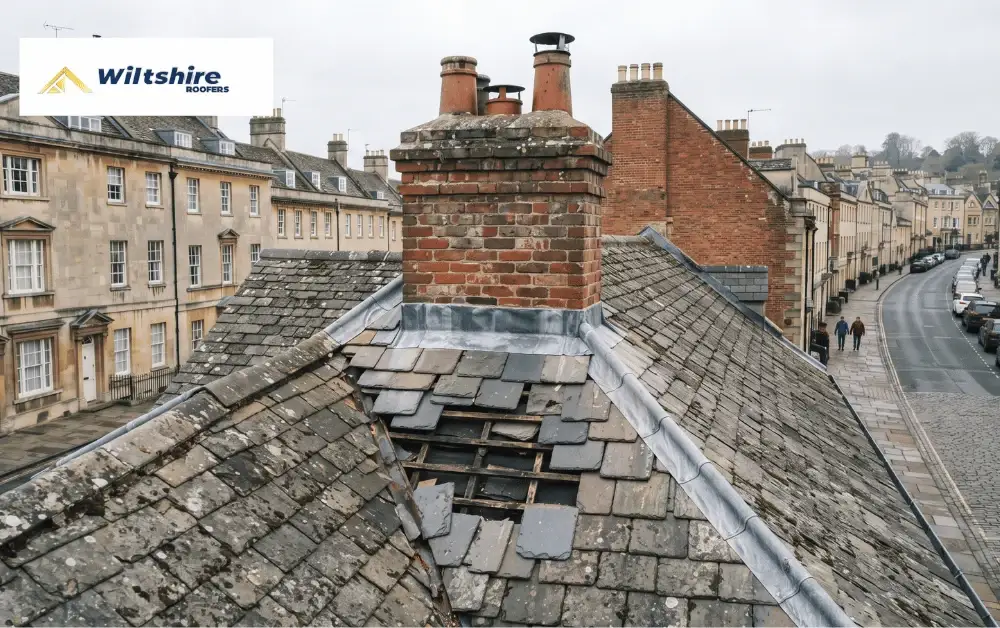
Not every damp ceiling means your roof is leaking. Sometimes it is condensation, a leaking pipe, or even a blocked bathroom extractor fan pushing moisture into the loft space. Our guide on spotting rising damp vs penetrating damp covers how to tell the difference. But there are a few classic signs that point specifically to a roof leak, not something else in the house.
Watch out for:
- Brown or yellow water stains on ceilings or upper walls
- A musty or damp smell in bedrooms or landing areas below the loft
- Peeling paint or bubbling plaster near the ceiling line
- Visible dripping during or shortly after heavy rain
- Damp patches that seem to grow larger after every storm
If you notice two or three of these together, it’s a strong sign you’re dealing with a genuine roof leak, not just condensation or a plumbing issue. The next section covers exactly how to track it down.
How To Find A Roof Leak
This is the part most people get wrong. The water stain on your ceiling is often nowhere near the actual leak, because water tends to travel sideways along rafters or roofing felt before it drips down somewhere lower or farther along the roof.
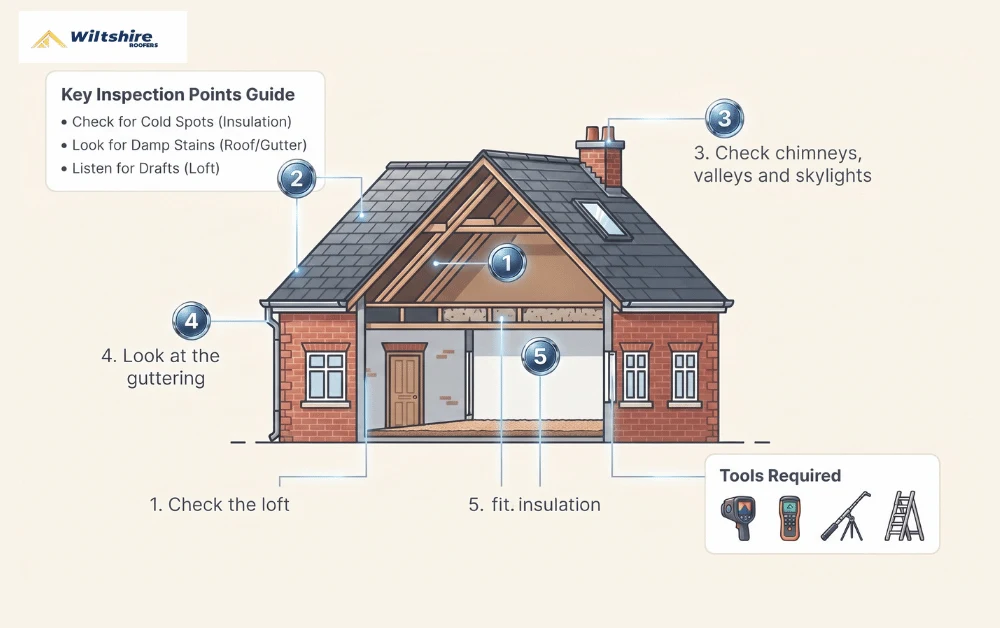
Here is a simple way to trace it:
Check the loft first
Take a torch up during daylight, ideally while it is raining, and look for wet timber, damp insulation, or a visible drip trail. Follow it upward toward the roof, and mark what you find with a pencil so you can track whether it worsens.
Inspect from outside
Once it is safe, check the roof from ground level. Missing or slipped tiles, cracked mortar around a chimney, or damaged flashing are common culprits.
Check the usual suspects
Chimneys, roof valleys, skylights, and anywhere a vent or pipe passes through the roof are the most likely points where a leak can start, since these areas rely on flashing rather than solid roofing material to remain watertight.
Look at the guttering too
Blocked or overflowing gutters can force water back up under the edge of the roof covering, which can look exactly like a roofing leak even though the roof itself is fine.
Feel the insulation
Wet insulation is noticeably heavier and colder to the touch than dry insulation. If one section feels different from the rest, the leak is likely directly above it.
Temporary Fixes You Can Safely Try Yourself
If you have found the leak and it is small, there are a few short-term steps you can take to limit the damage until proper repairs are carried out.
Inside the house, right away:
- Place a bucket or container under the drip
- Lay towels or old sheets to soak up any spreading water
- Move furniture, electronics, and anything valuable away from the area
- If water is anywhere near a light fitting or electrical socket, switch off the power to that area at the fuse box before doing anything else
- Cover flooring and remove soft furnishings like rugs or curtains from the affected room, and ventilate the space to help reduce damp
If you can safely access the affected area of roof:
- Clear away loose debris, moss, or leaves from around the damaged spot
- Apply roofing sealant or waterproof repair tape directly over small cracks or gaps
- Avoid walking on a wet or icy roof surface, and never attempt this alone if the roof is steep or high; see official guidance on working at height safely if you are at all unsure
Common Mistakes That Make a Leak Worse
A few well-meaning DIY habits can turn a small leak into a bigger job:
Relying on sealant as a permanent fix
Sealant over a cracked tile or a slipped slate can trap moisture beneath, accelerating timber rot instead of preventing it.
Using expanding foam to fill a gap
This often creates a dam effect, redirecting water to a new entry point instead of stopping it.
Leaving a small leak unattended
It rarely stays small, and typically leads to soaked insulation, rotting timber, and a bigger repair bill.
Walking on a roof without proper footing
Even a short trip onto a pitched or wet roof carries real fall risk, as covered above.
Ignoring a bulging, water-filled ceiling
If a section is sagging due to trapped water, place a bucket underneath and release the water through a small, controlled puncture at the lowest point. Don’t wait for the weight to build until it collapses on its own.
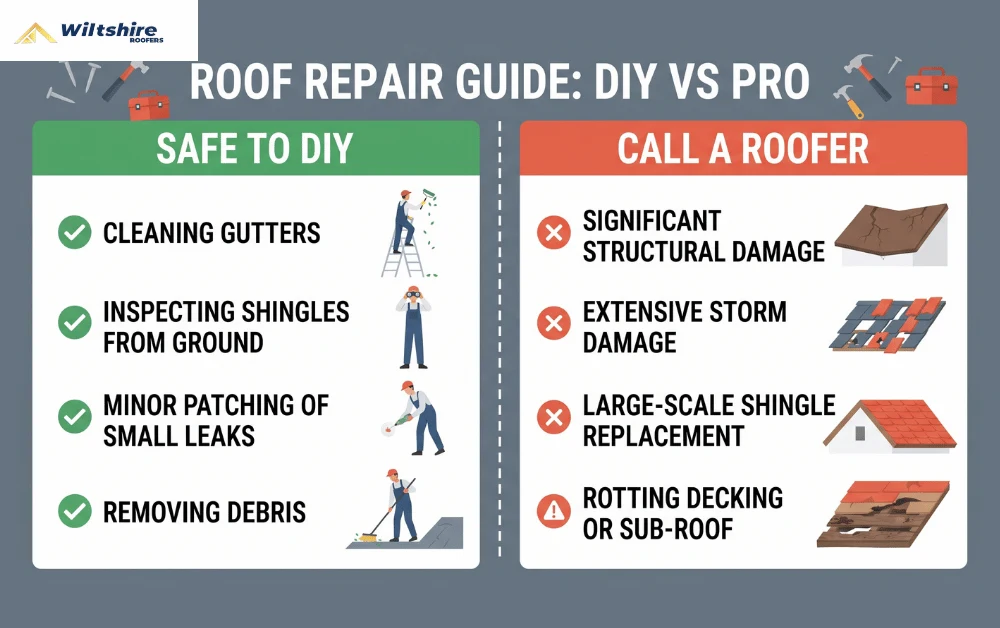
When You Need A Professional Roof Repair
Some leaks are a sign of something more serious happening underneath the surface. Here are the situations where calling in a roofer, rather than reaching for more sealant, is the safer choice:
- The same spot keeps leaking even after you have patched it
- You notice sagging areas on the roof or ceiling
- Multiple rooms are affected, not just one
- The roof is more than 20 to 25 years old
- There is visible rot, mould, or soft, spongy roofing felt
- The damage is on a steep pitch, or somewhere you cannot safely reach
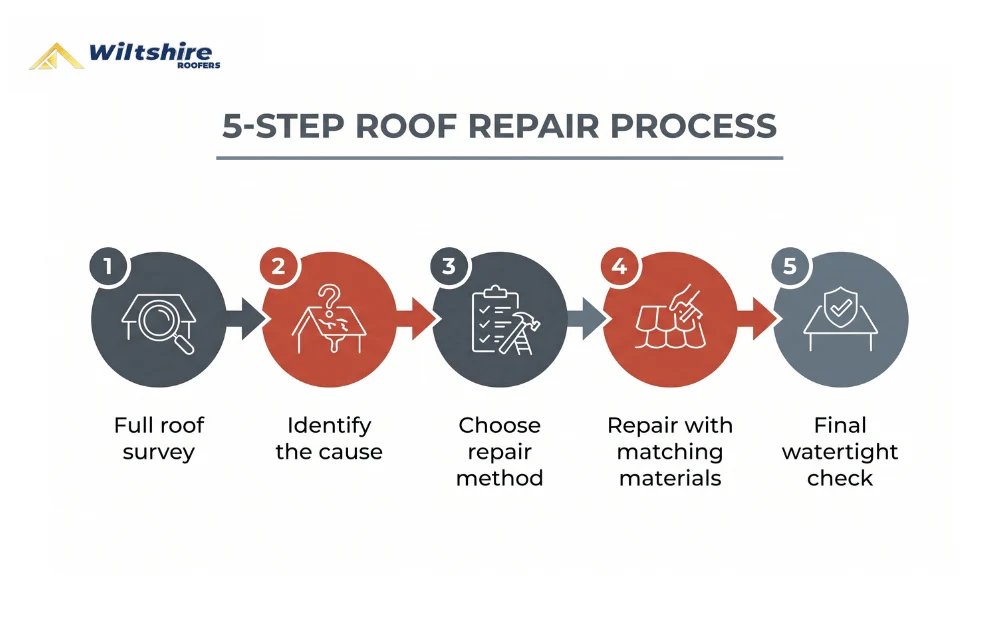
If you are dealing with anything beyond a small, easily reached patch, it is worth speaking to a professional about roof installation and repair services in Trowbridge rather than risking further damage with a DIY fix that does not hold. A professional repair from a team like Wiltshire Roofing & Building Ltd typically follows a process like this.
A typical process looks like this:
Full roof survey
This looks beyond the immediate leak for related wear nearby, before deciding on the right fix.
Identifying the true cause
This means confirming which specific failure is behind the visible damage, instead of assuming the nearest tile or seam is to blame.
Choosing the right repair method
The fix depends entirely on the roof type and the cause, whether that is replacing damaged tiles, resealing a flat roof membrane, or renewing flashing.
Repairing with matching materials
Properly matching your existing roof materials is important for both appearance and long-term performance.
A final check
A thorough repair finishes with confirmation that the area is fully watertight, not just visually patched.
This is a very different approach from a quick DIY seal, which is why a professional fix tends to last.
A Note On Period Properties In Trowbridge
Trowbridge has plenty of Victorian and Georgian terraces left over from its wool trade heritage, and older roofs like these often need a slightly different approach to a modern new build.
- Original slate roofing, lime mortar, and traditional lead flashing all behave differently to modern materials, and guidance on repairing older roofs is a useful starting point if you want to understand why.
- Some properties fall within conservation areas with specific rules about what can and cannot be altered.
- A generic modern fix does not always suit an older building or meet local requirements.
Quick Emergency Checklist

If you just want the short version, follow these steps in order:
- Contain the water with a bucket and towels
- Move furniture and valuables out of the way
- Switch off electrics near the affected area if needed
- Try to trace the source from the loft or, if safe, from outside
- Apply a temporary seal only if it is small and easily reached
- Book a proper inspection rather than relying on the temporary fix
Conclusion
A leaking roof is stressful, but it is rarely a reason to panic. The most important steps are finding the actual source of the leak instead of just treating where the water shows up inside, protecting your home with a short-term fix if needed, and getting a proper assessment before the damage has a chance to spread. Small, well-timed repairs are almost always cheaper and less disruptive than waiting until a minor leak turns into a much bigger job.
If you are dealing with a leak right now and would rather have an experienced local roofer take a look than guess at a DIY fix, the team at Wiltshire Roofing & Building Ltd is ready to help. Get in touch for a free, honest assessment, and we will tell you exactly what is going on and what it will take to put it right.
FAQs
Why does my roof only leak in heavy rain?
A small gap is often only overwhelmed when rain is driven sideways by wind or when the volume of water exceeds what the gap can handle. Light rain may not get through, while heavy rain pushes past it, which is common with lifted flashing or a partially slipped tile.
What is the best sealant for a roof leak repair?
The right sealant depends on the roofing material: flat roofs need a sealant designed for that specific membrane, while tiled or slated roofs often use roofing cement around flashing points. Using the wrong type can shorten its lifespan or cause it to fail to bond properly.
Will my home insurance cover a leaking roof?
It depends on the cause. Sudden damage, such as a storm ripping off tiles, is usually covered. Still, gradual leaks caused by wear, poor maintenance, or an ageing roof are often excluded, since insurers expect roofs to be kept in reasonable repair.
How can I prevent the same roof leak from happening again?
Regular upkeep, like an annual roof inspection, clearing gutters each autumn, trimming back overhanging branches, keeping an eye on moss build-up, and fixing small issues such as a slipped tile as soon as you spot them, is what keeps most leaks from starting in the first place.
