

Damp proofing cost in the UK typically runs £500 to £4,000, depending on the type of damp and the size of the job. A single wall treatment with a chemical damp-proof course and re-plastering runs £500 to £1,200, a whole-house treatment £2,000 to £4,000, and basement or cellar waterproofing £4,000 to £14,000, since it uses a different method entirely. Getting the diagnosis right matters just as much as the price, since the wrong treatment for your damp type wastes money either way.
This guide breaks down real cost figures for every type of damp treatment, explains what’s usually included in a quote and what gets left out, and walks through the factors that push your price up or down. We’ll also cover why getting the diagnosis right before paying for treatment can save you from spending money on the wrong fix entirely.
Damp Proofing Cost at a Glance
Here’s a quick summary before we go into detail on each one.
| Damp Type | Typical Cost | What It Involves |
| Rising damp (single wall) | £500 – £1,200 | Chemical DPC injection plus re-plastering |
| Rising damp (whole house) | £2,000 – £4,000 | Full DPC treatment across multiple walls |
| Penetrating damp | £300 – £3,000+ | Repairs to the actual source, such as render, pointing, or gutters |
| Condensation | £250 – £1,200 | Ventilation improvements, extractor fans, or a PIV unit |
| Basement/cellar tanking | £4,000 – £14,000 | Waterproof membrane or cementitious tanking system |
| Independent damp survey | £150 – £500 | Diagnosis before any treatment begins |
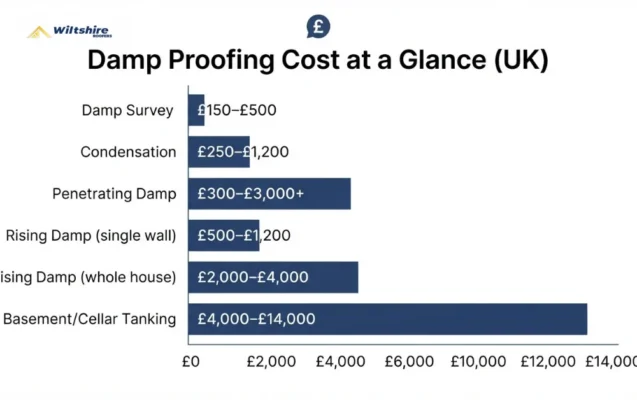
These are typical UK ranges. Your actual cost depends on the property size, the extent of the problem, and where you’re based.
What a Standard Damp Proofing Quote Usually Covers?
This is where most homeowners get caught out. A damp-proofing quote that looks cheap at first glance often covers only the injection or membrane itself, not the work needed to finish the job properly.
Here’s what commonly gets left off a headline price:
- Re-plastering. Old plaster on a damp wall usually contains salts that continue to draw moisture from the air, even after a new damp-proof course is installed. If it isn’t removed and replaced, the wall can look damp again within months.
- Decorating. New plaster needs several weeks to dry before it can be painted properly.
- Waste removal. Skip hire or rubble disposal isn’t always included in the base price.
- Repairs to the actual cause, such as fixing a leaking gutter or repointing brickwork, if the damp turns out to be penetrating rather than rising.
Before agreeing to any quote, ask exactly what’s included. A quote that only covers the injection is rarely the full cost of the job.
Chemical Damp Proof Course Cost by Wall and Property Size
A chemical damp proof course (DPC) is the most common treatment for rising damp specifically. If you’re not certain that’s actually what you’re dealing with rather than penetrating damp, our guide on how to spot rising damp vs penetrating damp is worth checking first. DPC treatment is usually priced per linear metre of wall, with the injection itself typically costing £60-£120 per metre.
That figure alone doesn’t tell the full story, though, since most homeowners want an all-in price that includes replastering. Here’s roughly what that looks like by scope:
- Single internal wall: £500 – £1,200
- One room (two walls): £1,000 – £2,000
- Small terrace or flat: £1,300 – £2,800
- 3-bed semi-detached: £1,800 – £3,800
- 4-bed detached or larger terrace: £2,800 – £5,500
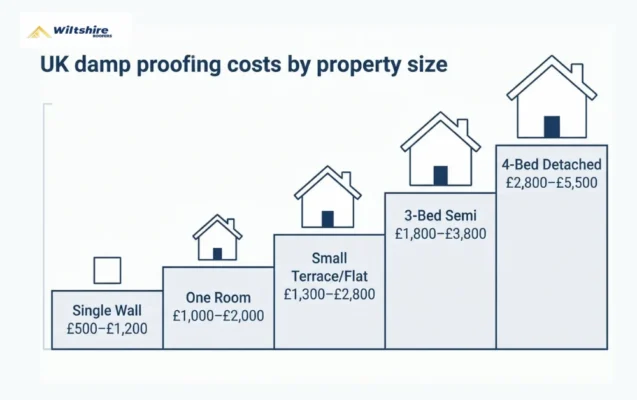
Larger properties naturally cost more simply because there’s more wall length to treat, not because the treatment itself is more expensive per metre.
Basement and Cellar Waterproofing Cost
Basement and cellar waterproofing is a different job entirely from above-ground damp proofing, and it costs more because it involves a completely different method.
Two main approaches exist: cementitious tanking, which seals the inside of the walls directly, and a cavity drain membrane system, which manages water by channelling it away rather than blocking it outright. Cementitious tanking typically costs £40 to £100 per square metre, while a full cavity drain system with a sump and pump runs £80 to £150 per square metre. For a typical cellar, total costs often range from £4,000 to £14,000, depending on size and the system used.
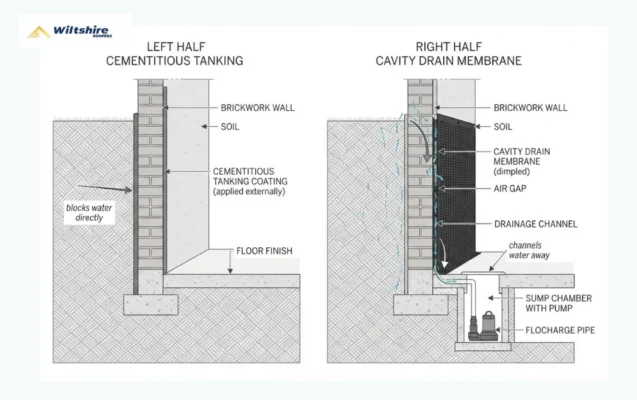
If you’re planning a full basement conversion or want a deeper breakdown of tanking methods, our guide to basement and cellar waterproofing covers it in full detail.
Damp Survey Cost: Why It’s Worth Paying For
An independent damp survey typically costs £150 to £500, and it’s genuinely one of the best-value steps in the whole process. A proper survey identifies exactly what kind of damp you’re dealing with before any money is spent on treatment.
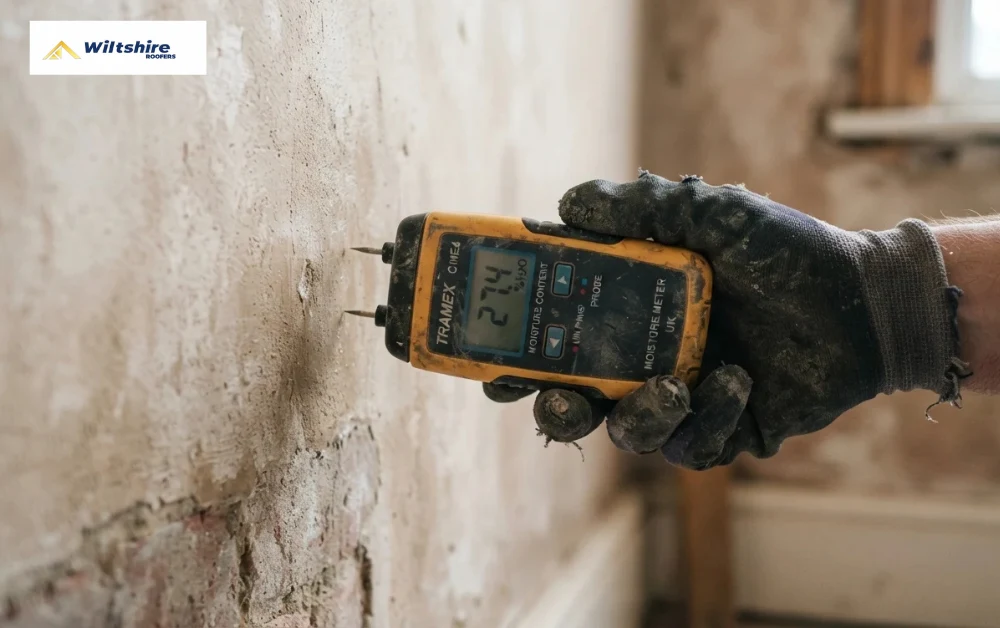
This matters because rising damp, penetrating damp, and condensation each need a completely different fix, and treating the wrong one wastes money without solving the actual problem. If you’re unsure which type you’re facing, our guide on how to spot rising damp vs penetrating damp walks through the visible differences between them.
What Actually Affects Your Damp Proofing Price
A few consistent factors push the price up or down, regardless of the treatment type:
- Property age and wall type. Older properties with solid walls, or those originally built with lime mortar, often require different materials and more careful preparation than modern cavity-wall homes.
- Size and extent of the problem. A single damp patch costs far less to treat than damp that’s spread across multiple rooms.
- Access. Below-ground or hard-to-reach areas add labour time.
- Location. Labour costs vary across the UK, and properties in the South East tend to sit slightly above the national average. If you’re in Wiltshire specifically, getting a quote from expert damp proofing services in Trowbridge gives you a far more accurate figure than a national average ever could.
- Guarantee type. Work backed by an insurance-backed guarantee, which protects you even if the contractor later goes out of business, typically costs a little more than a basic contractor-only guarantee.
Why a Correct Damp Diagnosis Should Come Before Any Fix?
This is genuinely the most important section in this guide, and it’s worth reading carefully before you commit to anything.
Damp generally falls into three categories, and each one needs a completely different fix:
- Rising damp comes up from the ground through the wall’s structure, rarely rising above about a metre, and often leaves a tide mark of salts near the skirting board.
- Penetrating damp comes in sideways through a specific fault, such as damaged render, failed pointing, a blocked gutter, or a cracked pipe, and can appear at any height on a wall.
- Condensation occurs when warm, moist indoor air meets a cold surface, often appearing as black mould around windows, in corners, or behind furniture. It’s by far the most common type of damp in UK homes.
Before paying for chemical treatment, it’s worth checking a few low-cost possibilities first, since these sometimes turn out to be the actual cause:
- Clearing blocked air bricks
- Fixing leaking or overflowing gutters
- Lowering external ground levels if they’re sitting above the damp proof course
- Improving ventilation with an extractor fan or trickle vents
Not every damp problem needs an expensive fix, and a proper diagnosis is the only way to know for certain. Looking for an independent, accredited surveyor is a good starting point, and the Property Care Association is the main UK trade body for damp, timber, and waterproofing specialists.
If you’re not sure which type of damp you’re even dealing with before you start comparing prices, our complete guide to damp in your home walks through all three types side by side and helps you narrow it down before you get quotes.
Damp Proofing Costs in Older Trowbridge and Wiltshire Properties
Wiltshire has plenty of older housing stock, and older properties don’t always behave the same way as modern builds when it comes to damp.
Many were originally constructed with solid walls and lime mortar, which is designed to let moisture pass through and evaporate naturally rather than trap it. Applying a modern cement-based treatment to a property like this can sometimes trap moisture rather than solve the problem, which is why period properties often need a more careful, tailored approach rather than a standard one-size-fits-all fix.
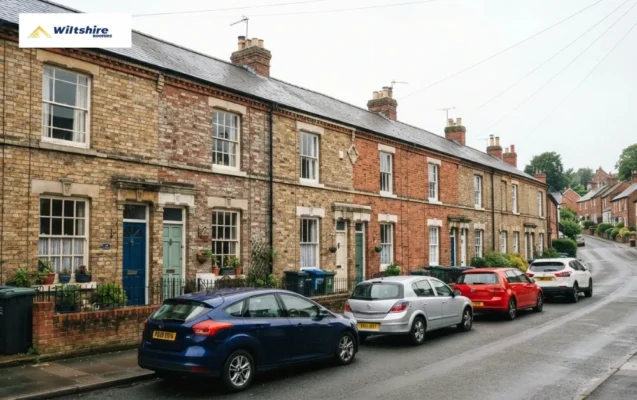
If you’re dealing with damp in an older Trowbridge or Wiltshire home, as an expert roofers in Trowbridge WILTSHIRE ROOFING & BUILDING LTD has worked on plenty of period properties across the area and can talk you through what’s actually needed for yours.
Conclusion
Damp proofing costs vary widely because damp itself isn’t a single problem; it’s several different issues, each needing a different fix. A small rising damp treatment might cost a few hundred pounds, while a full basement waterproofing job can run into the thousands. The number you should focus on isn’t just the price on a quote; it’s whether that quote actually matches what’s causing the damp in the first place.
If you’re dealing with damp and want an honest assessment rather than a guess, Wiltshire Roofing & Building Ltd can help, our reviews reflect the standard of work behind that reputation. Get a free quotation, and we’ll give you a clear answer, not just a sales pitch.
FAQs
Is it illegal to sell a house with rising damp?
No, it isn’t illegal, but sellers are legally required to disclose known issues if directly asked, and failing to do so honestly can cause problems later. Most buyers will also have a survey that flags visible damp, so addressing it before selling often makes the process smoother.
How many years does a damp proof course last?
Is it illegal to sell a house with rising damp?
No, it isn’t illegal, but sellers are legally required to disclose known issues if directly asked, and failing to do so honestly can cause problems later. Most buyers will also have a survey that flags visible damp, so addressing it before selling often makes the process smoother.
How much does damp proofing cost per square metre?
For basement or cellar tanking, expect to pay roughly £40-£150 per square metre, depending on the system used. Above-ground wall treatments are usually priced per linear metre rather than per square metre, typically £60 to £120 per metre for chemical DPC injection.
