

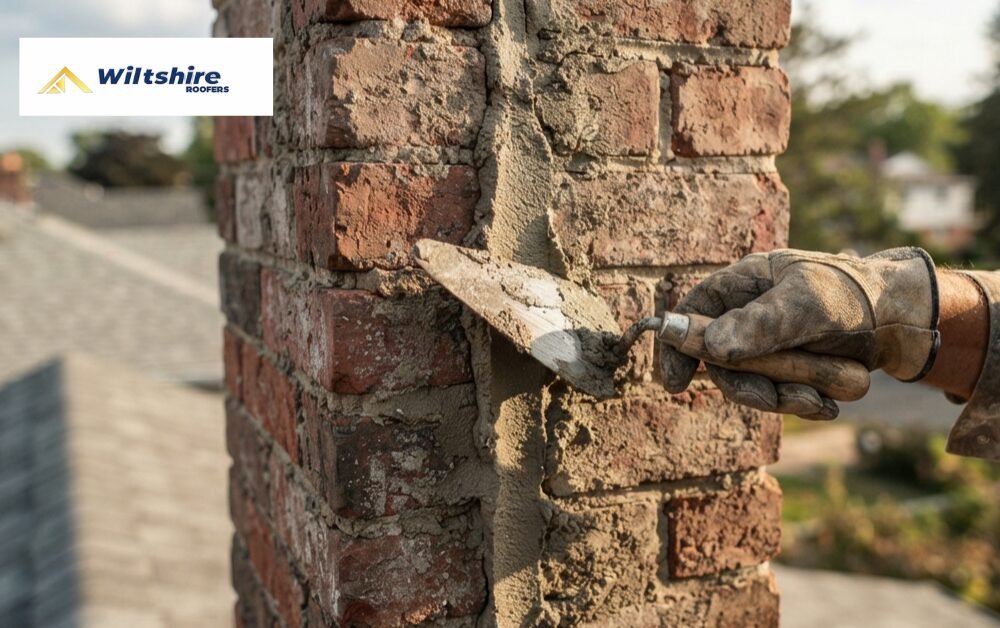
A crack running through the brickwork, mortar that’s started crumbling away, or a damp patch showing up near the chimney breast inside the house- these are usually the first clues that a chimney stack needs attention. Sitting at the highest point of a property, chimney stacks take more weather than almost anything else on the building: constant rain, wind, and frost, year after year. Given enough time, that exposure wears down the mortar joints, and once those go, water has a direct route into the brickwork.
So what is chimney stack repointing? It’s the process of removing old, failing mortar and packing in fresh mortar to rebuild that barrier, different from a repair (fixing one specific issue) or a rebuild (reconstructing the chimney entirely). The mortar itself keeps water out and spreads the stack’s weight evenly, so once it fails, damp and frost damage follow quickly.
This guide covers the signs that repointing a chimney stack is needed, how the process works from start to finish, and roughly how long it lasts once it’s done.
Signs a Chimney Stack Needs Repointing
Mortar deterioration rarely happens overnight; there’s usually a period when catching it early would have meant a much smaller repair bill. Based on what we typically find on chimney stacks around Trowbridge, the signs worth watching for include:
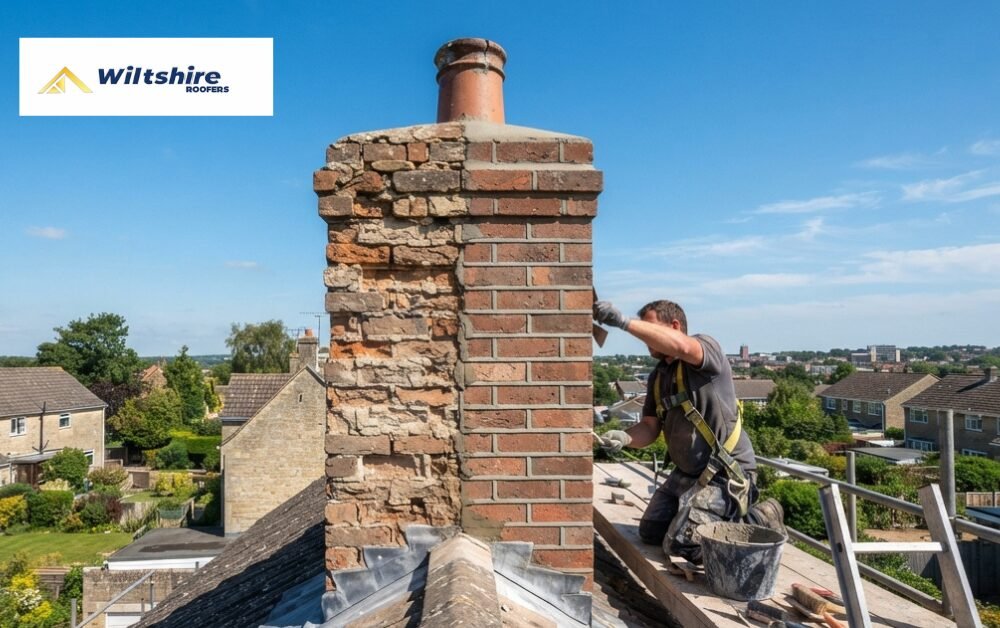
- Mortar that’s visibly crumbling or has gone missing between bricks
- Cracks that run through the brickwork itself, not just the surface
- Damp patches appearing near the chimney breast inside the house
- Bricks on the stack that look loose or have shifted from their original position
- Water staining or damp in the loft space directly beneath the chimney
Any of these on their own is worth a second look, and if you’re seeing more than one, it’s a reasonably strong sign the mortar has already started to fail.
What Causes Mortar to Break Down
A combination of factors usually drives this, rather than any single cause. Roofing experts typically point to a few recurring culprits:
- Weather exposure tops the list. Sitting above the rest of the roofline, chimney stacks catch the full brunt of rain, wind, and frost with nothing shielding them. Freeze-thaw cycles do the most damage here; water gets into small cracks, freezes, expands, and gradually forces the mortar apart from within.
- The age of the property matters too. Plenty of older homes across Wiltshire have mortar that’s simply run its course, especially where it hasn’t been touched in several decades.
- Sometimes it’s down to the wrong mortar being used in the first place. Cement-based mortar on an older, softer brick chimney is a common mistake; it ends up harder than the brick it’s meant to protect, which means the brick cracks under pressure rather than the mortar flexing.
How to Repoint a Chimney Stack: Step-by-Step
Chimney stack Repointing follows a specific sequence, and each stage matters for how well the finished job holds up.
Inspecting the stack.
Work doesn’t start until the chimney’s been properly assessed, including checking how far the mortar damage extends, whether there are any structural concerns, and what the original mortar type was. This shapes how much work is actually needed.
Raking out the failed mortar.
The damaged mortar gets removed from the joints to a consistent depth, usually around 15-20mm, carefully enough to avoid damaging the brick edges either side.
Choosing mortar suited to the property.
This step matters more than people expect. Lime mortar is often the right choice for period properties, as it flexes with the building and allows moisture to escape rather than trap it. Cement-based mixes can suit newer builds, but using the wrong type on an older property risks causing the same damage that prompted the repair in the first place.
Packing in fresh mortar.
New mortar is worked into the raked-out joints, filled to the full to avoid air pockets, and left to form a solid bond with the brick on either side.
Finishing to match and shed water.
The joints are finished to match the existing profile (flush, weathered, or recessed) to direct water away from the joint rather than letting it sit and pool.
Cleaning up before the mortar sets.
Excess mortar is wiped from the brick faces while it’s still workable, leaving a clean finish that blends in rather than standing out.
Duration and Durability of a Repointing
Most repointing jobs are completed within a day or two, depending on the stack’s size and the extent of the damage. Weather plays a role in scheduling too; mortar needs the right temperature and dry conditions to cure properly, so timing can shift depending on the forecast.
Done right, with mortar suited to the property, a repointing job typically lasts 20 to 30 years before it needs revisiting. Getting that mortar choice right at the outset matters more to long-term durability than almost any other step in the process.
If you’re wondering about repair & repointing chimney stack cost, our guide breaks down the key pricing factors for Trowbridge homeowners.
Professional vs. DIY: What It Really Comes Down To
From ground level, chimney stack repointing can look manageable. In practice, it carries real risk without the right experience behind it.
- Height is the most obvious issue. Chimney stacks sit at the highest point of most properties, and without proper scaffolding, harnesses, and training, working safely up there isn’t something to improvise.
- Getting the mortar wrong is just as common a mistake. As covered above, the wrong mix on an older chimney can cause more damage than the original problem, sometimes cracking bricks that then need a far more expensive repair.
- There’s also a structural judgment call involved. What looks like ordinary wear can occasionally be masking something more serious, and it takes experience to know the difference.
This is where bringing in professional roofers in Trowbridge makes a real difference. At WILTSHIRE ROOFING & BUILDING LTD, we offer repointing services across Trowbridge and the surrounding area, using materials and access equipment suited to the job at hand. Every property is assessed on its own terms, with mortar matched to the building’s age and type rather than a one-size-fits-all approach. When done properly, a repointed chimney doesn’t just look better; it lasts for decades and keeps water damage from seeping back in.
Conclusion
A chimney stack that’s properly maintained protects more than just how a roofline looks; it’s standing between the property and water damage, structural problems, and repair costs that only grow the longer they’re left. Spotting mortar wear early, whether that’s a crack, crumbling joints, or a damp patch appearing inside, saves homeowners across Trowbridge real time and expense down the line.
If you’ve noticed any of these signs, it’s worth having someone experienced take a look rather than waiting to see how far it goes.
Contact us to book an inspection and get a clear, honest quote for repointing work.
FAQs
How much does chimney repointing cost?
It depends on the stack’s size, the extent of the damage, and how easy the chimney is to access. The most reliable way to get a number is an on-site inspection and quote for the specific property.
How often does a chimney need repointing?
Most stacks need attention every 20 to 30 years, though this varies depending on the original mortar type and the property’s exposure to harsh weather.
Can I repoint a chimney myself?
It’s technically possible, but working safely at height and choosing the right mortar mix both need specific skills and equipment. Getting either wrong tends to be expensive, either due to injury risk or to damage that must be redone properly.
How long does a repointed chimney last?
When done correctly with mortar suited to the property, it typically lasts 20 to 30 years before further work is needed.
