

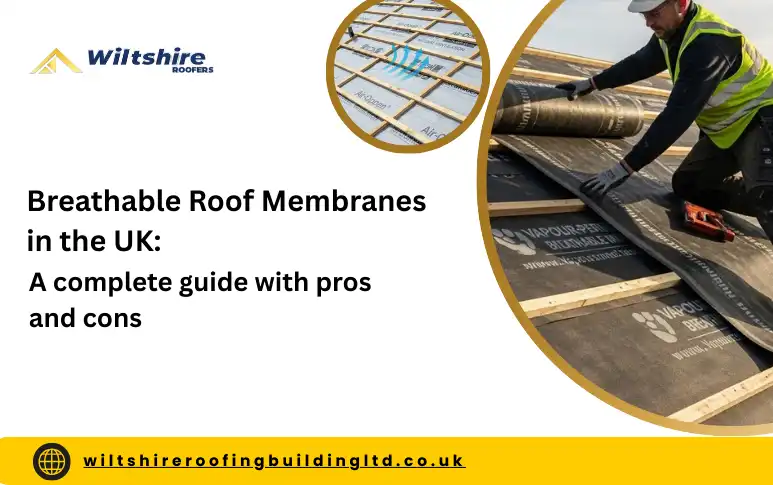
A safe and dry home starts with a strong roof. A breathable roof membrane plays a major role. It keeps out rain and wind while letting trapped moisture escape. This stops damp, mould, and damage inside the roof space.
An older roof often traps moisture. Over time, this leads to wet timbers, weak insulation, and poor airflow. Modern breathable roofing felt, or a breathable membrane, fixes this problem by letting the roof ” breathe while staying fully waterproof. It keeps the inside warm, dry, and steady through the UK’s changing weather.
As experienced roofers in Trowbridge, we will guide you to the available types, their pros and cons, and why they are now a standard choice for both new builds and re-roofing work.
What is a Breathable Roof Membrane
A breathable roof membrane, also known as a breather membrane, is a protective layer fitted directly onto roof rafters or over insulation, beneath the tiles or slates. It keeps rain, snow, and wind-driven moisture out while allowing water vapour from inside the building to escape. This balance is what makes it “breathable”.
Unlike traditional roofing felt, which is largely impermeable, a breathable membrane actively manages moisture movement. This helps prevent condensation building up within the roof structure, which over time can lead to timber rot, mould growth, and damage to insulation.
Why Breathable Membranes Matter
- Protects roof timbers from moisture damage and rot
- Reduces the risk of condensation forming in loft and roof spaces
- Helps maintain the effectiveness of loft insulation by keeping it dry
- Improves overall energy efficiency by supporting a well-insulated, dry roof
- Extends the lifespan of the roof structure and covering materials
- Meets current UK building regulations for roof ventilation and moisture control
Types of Breathable Roof Membranes
Choosing the right roofing membrane depends on your home, ventilation, and insulation setup. In the UK, two main options are used.
1. Air-Open Breathable Membrane
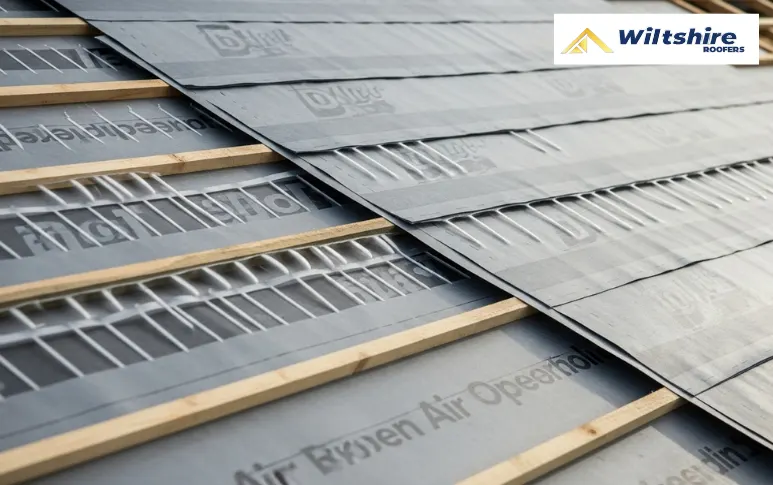
An air-open membrane lets both air and vapour move freely. This gives strong protection against condensation, even when ventilation is limited. Because airflow is natural, you often do not need extra vents.
It works well for newer homes with tight insulation and roofs designed for modern standards. It keeps the roof space dry without blocking airflow.
Key benefits:
- Reduces the need for additional roof vents, saving on installation costs
- Handles high levels of water vapour from modern, well-insulated homes
- Suits low-pitch roofs where airflow is naturally restricted
- Lowers the risk of trapped moisture in loft spaces
Typical lifespan: around 40 to 50 years when installed correctly, matching the lifespan of most modern roof coverings.
2. Vapour-Permeable Breathable Membrane
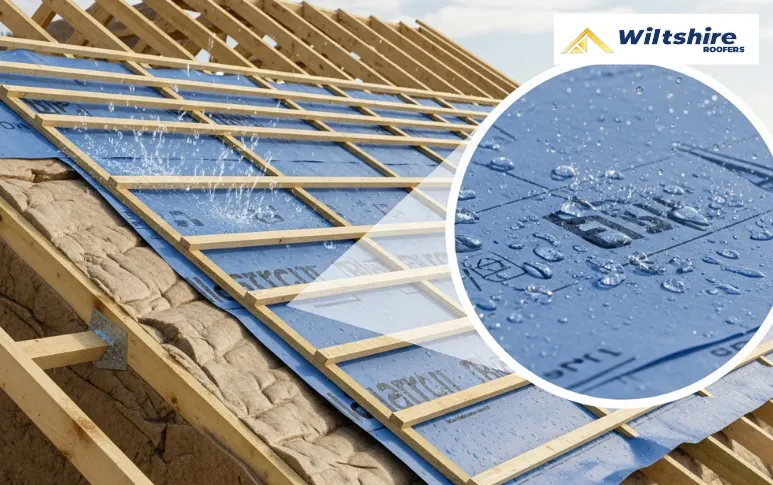
A vapour-permeable option lets moisture vapour escape but keeps out rain and snow. It is slightly less open than air-open felt, but it still offers solid breathability.
It is often used on older roofs, traditional builds, or roofs with good ventilation. It helps keep the structure dry and prevents damp and mould.
Key benefits:
- Works well alongside traditional eaves and ridge ventilation
- A cost-effective option for renovation and re-roofing projects
- Provides reliable weatherproofing against rain and snow
- Suits roofs with steeper pitches and established ventilation paths
Typical lifespan: around 25 to 30 years, though this can vary depending on installation quality and weather exposure.
Pros and Cons of Breathable Roof Membranes
Breathable membranes offer strong protection, but each roof is different. Here are the key benefits and things to keep in mind.
Pros
- Cuts Down Condensation
- Helps Roof Last Longer
- Better Insulation and Energy Savings
- Lighter and Faster to Install
- Strong Protection in All Weather
Cons
- Higher Initial Price
- Some Roofs Still Need Ventilation
- Needs Careful Installation
- Not a Fix for Existing Damp Issues
- Quality Varies Between Products
If gaps or overlaps are not done correctly, leaks can happen. Skilled installers are essential for a watertight result. Always choose an expert roofing company to ensure proper installation and avoid later issues.
At Wiltshire Roofing & Building Ltd, we provide complete roof installation services, from breathable membrane fitting to full re-roofing, carried out by experienced, qualified installers who get every detail right the first time. Our team ensures membranes, insulation, and ventilation work together properly, so you get a roof that stays dry and performs well for years.
Contact us today for a free quote, and let our experts handle your roof installation from start to finish.
Conclusion
A breathable roof membrane is one of the best ways to keep your home dry and protected. It prevents moisture from becoming trapped, improves airflow, and protects the roof structure from water damage. For new builds or re-roofing, choosing the right breathable felt or breathable roofing membrane helps the roof last longer and perform better.
Top UK choices include Cromar Vent 3 Pro and Roofshield membrane. These offer strong waterproofing and reasonable vapour control. When installed by a skilled roofer, a quality breathable membrane roof can last for decades and give stable protection in all weather.
FAQs
Is a breathable roof membrane waterproof?
Yes. A breathable roof membrane blocks rain, snow, and wind, making it fully waterproof from the outside. At the same time, it allows moisture vapour to escape from the roof space. This balance helps prevent damp, mould, and timber decay. It keeps the structure dry without trapping moisture, which is a key problem with older roof felt.
What is the best breathable membrane for a roof?
The best membrane depends on your roof design, ventilation, and budget. In the UK, trusted options include Cromar Vent 3 Pro and Roofshield membrane. These offer strong waterproofing, good breathability, and long-term stability. They work well in both new builds and re-roofing projects. Your roofer can help choose the best option for your home.
How long does a breathable roof membrane last?
A high-quality breathable membrane can last 25 to 30 years when fitted correctly. Its lifespan depends on the installation, ventilation, and overall roof condition. Regular roof checks help maintain its performance and prevent minor issues from becoming costly repairs. A good membrane will stay durable and stable through the UK’s wet weather.
Does a breathable membrane need an air gap?
Most modern breathable membranes do not require an air gap because they allow vapour to escape naturally. However, some older roof types or specific insulation setups may still need a ventilation space. It depends on the roof design and the product used. Always read the product instructions or ask your roofing contractor for clear guidance.
