
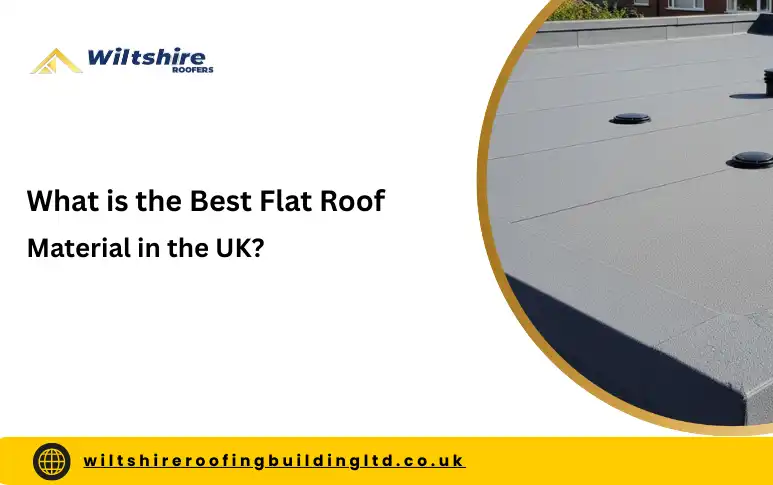
EPDM rubber comes out on top as the best all-round flat roof material for extensions and garages. With a lifespan of 30 to 50 years, strong flexibility against temperature shifts, and reliable performance in typical UK weather, it consistently balances durability, cost, and low maintenance better than the alternatives.
Flat roofs are everywhere across the UK, from extensions and garages to modern architect-designed homes, but not every material performs the same way once it’s exposed to UK weather. Rain, wind, temperature swings, and the odd heatwave all put different pressures on a flat roof, and picking the wrong material usually shows up as leaks, cracking, or a shorter lifespan than expected.
Here’s a full breakdown of the main options, covering how long each one typically lasts, where it performs best, the pros and cons, and the practical trade-offs worth weighing up before you commit to a material.
The Best Material for Every Roofing Project
EPDM Rubber: The Best All-Rounder
EPDM comes in large, continuous sheets, so there are far fewer seams and joints where water could eventually get through. It handles thermal movement well, expanding and contracting with the building through hot summers and cold winters instead of stiffening and cracking. This makes it particularly well suited to the UK’s unpredictable weather, where a roof can go from frost to direct sun within a single day. It’s become the default choice on most residential extensions and garage conversions because it strikes a good balance between cost, durability, and ease of maintenance. Homeowners generally find it a low-hassle material once it’s properly installed.
Pros
- Minimal seams reduce the risk of leaks
- Flexes well across temperature swings without cracking
- Low maintenance once fitted
- Easy and inexpensive to patch if punctured
- Works on most roof shapes and pitches
- Resistant to UV degradation over decades
Cons
- Can look plain compared to premium finishes
- Seams, where they do exist, need proper adhesive bonding or they can lift
- Dark colour absorbs more heat, which can affect rooms directly underneath
- Susceptible to punctures from sharp debris or careless foot traffic
- Adhesive-based systems can fail if the substrate isn’t properly prepared
GRP Fibreglass: Best for Foot Traffic
Once cured, GRP forms a hard, seamless surface that stands up to repeated foot traffic far better than softer membrane materials, which can wear thin or scuff over time. It’s essentially a layer of resin and fibreglass matting that hardens into a rigid, shell-like finish, which is why it’s such a popular choice for roof terraces and balconies. Because there are no joints or seams, there’s very little opportunity for water to get underneath the surface. The main planning consideration is weather during installation, since the resin needs a dry environment to cure properly, which can push jobs later into spring or summer in some parts of the country.
Pros
- Extremely durable underfoot
- Fully seamless, so no joints to fail
- Good aesthetic finish with a range of colour options
- Low maintenance once installed
- Resistant to standing water
- Holds up well against wear from furniture or planters
Cons
- Must be installed in dry weather
- More expensive than felt
- Can crack if the roof deck flexes or moves underneath it
- Repairs are trickier and more visible than with rubber
- Strong odour during application
- Requires a properly prepared timber deck to bond correctly
Liquid Waterproofing: Best for Awkward Roofs
Since it’s applied by roller or brush rather than in sheets, liquid GRP or polyurethane flows around tricky detailing like upstands, pipework, and vents that would otherwise need extra cutting and joining. This makes it a strong option for roofs with an unusual shape or many fixtures, where sheet materials would need multiple cuts and seams to fit properly. It can also be applied directly over many existing roof surfaces, reducing removal and disposal costs. The main variable is application quality, since the finish depends heavily on the installer getting coverage and curing conditions right.
Pros
- Ideal for complex shapes and detailing
- Fully seamless finish
- Can often be applied directly over an existing roof
- Flexible enough to handle minor movement
- Good option for extending the life of an ageing roof
- Relatively quick application on smaller or detail-heavy areas
Cons
- Very dependent on correct application and weather conditions
- Quality varies a lot depending on the installer’s experience
- Can be harder to patch neatly later without it being visible
- Thinner coverage in some systems means it may need reapplication
- Not always suitable for large open roof areas
Mastic Asphalt: Best for Heavy-Duty, Long-Term Use
A traditional, hardwearing option often used on commercial buildings, balconies and roofs with heavy plant equipment on top. It’s applied hot as a molten material, which lets it bond seamlessly across the whole roof and settle into every corner and detail without joints. This has made it a long-standing favourite on commercial and industrial buildings where the roof needs to withstand constant use for decades. It’s not a common choice for smaller domestic projects simply because of the cost and the specialist labour involved, but where it’s used, it tends to outlast almost everything else.
Pros
- Extremely tough and durable under sustained heavy use
- Handles heavy loads and constant foot traffic well
- Very long lifespan compared to most alternatives
- No seams at all, so leak points are minimal
- Well suited to roofs with plant equipment, tanks
- Proven track record on commercial and industrial buildings
Cons
- Expensive compared to almost every other option
- Requires specialist installers who are increasingly harder to find
- Heavy material adds significant load to the roof structure
- Installation involves working with molten material on site
- Can be less flexible than modern membranes in extreme temperature swings
Metal Roofing (Zinc, Lead, Aluminium): Best for Premium or Heritage Projects
Common on high-end extensions, dormers and listed or period buildings where appearance and longevity both matter. Standing-seam metal systems give a distinctive, high-quality look that’s hard to replicate with any other material, which is why they’re often specified on architect-led projects. Lead, in particular, has a long history in UK roofing and is often required on conservation area properties to match existing detailing. Performance is excellent over the long term, but the cost and specialist labor involved usually reserve it for projects where budget isn’t the main constraint.
Pros
- Long lifespan that often outlasts every other material on this list
- Low maintenance once properly installed
- Attractive, distinctive finish that suits premium projects
- Lead in particular is often required for conservation area properties
- Recyclable at end of life
- Performs well across a wide range of weather conditions
Cons
- Highest material and labour cost on this list by a significant margin
- Needs specialist fitting from experienced metalwork roofers
- Lead work can be a target for theft due to scrap value
- Thermal expansion needs to be carefully managed in the design
- Zinc and aluminium can be prone to galvanic corrosion with the wrong fixings
Torch-On Felt: Best for Tight Budgets
Modern bitumen felts are more elastomeric and flex better with temperature changes than older formulas, though it’s still the shortest-lived option here. It’s applied in layers using a blowtorch to melt and bond the bitumen to the roof deck, a familiar process for most roofing contractors that keeps labor costs down. This makes it a practical choice when budget is the main driver, particularly for outbuildings, sheds or roofs where a shorter lifespan is acceptable. The trade-off is that it needs closer monitoring over time and will typically need replacing sooner than the alternatives on this list.
Pros
- Cheapest upfront cost of all the main options
- Widely available from almost any roofing supplier
- Fast to install
- Easy for most roofers to work with, since it’s a familiar material
- Good short- to mid-term waterproofing when installed correctly
- Works well as a lower-cost solution for outbuildings or temporary structures
Cons
- Shortest lifespan of the main options
- Prone to blistering and cracking over time as it ages
- Torch-on installation carries fire risk during application
- Needs more frequent maintenance and inspection
- Multiple layers and seams increase the number of potential leak points
- Often ends up costing more over the long run once replacement is factored in
Quick Comparison of materials at a glance
| Material | Lifespan | Best For | Main Drawback |
|---|---|---|---|
| EPDM Rubber | 25 to 50 years | Standard domestic roofs | Dark color absorbs heat |
| GRP Fibreglass | 25 to 30 years | Foot traffic, balconies | Must be installed dry |
| Single-Ply Membranes | 20 to 40 years | Modern, architect-led builds | Needs accredited installer |
| Torch-On Felt | 10 to 20 years | Tight budgets | Shortest lifespan |
| Liquid Waterproofing | 15 to 25 years | Awkward shapes, detailing | Result depends on installer skill |
| Mastic Asphalt | 40 to 60+ years | Heavy-duty, commercial | High cost, heavy material |
| Metal (Zinc/Lead/Aluminium) | 40 to 70 years | Premium or heritage projects | Highest material and labor cost |
Lifespan figures are a useful starting point, but they’re not the whole picture. How long a flat roof actually lasts also depends on installation quality, ventilation beneath the roof deck, drainage, and maintenance over the years, which is why working with one of the best roofing contractors in your area matters just as much as the material you choose.
At Wiltshire Roofing & Building Ltd, with over 30 years of experience, we provide expert flat roofing services across Trowbridge and the surrounding areas, including installation, repair, and maintenance using all the materials covered above. Whether you’re weighing up EPDM against GRP for a home extension or need a heavy-duty solution for a commercial building, our team can assess your roof and recommend the material that genuinely suits your property, your budget and how long you want it to last.
Reach out to us today and let’s discuss the right material for your flat roof project
Conclusion
There isn’t one single best flat roof material for every UK property; it comes down to how the roof will be used, its shape, the budget, and how long you want it to last before replacing it. EPDM suits most standard domestic roofs, GRP wins wherever foot traffic is involved, single-ply membranes suit high-spec modern builds, felt fits tight budgets, liquid systems handle awkward detailing, mastic asphalt suits heavy-duty commercial use, and metal roofing suits premium or heritage projects. The right choice matches the actual demands and lifespan you need from the roof, not just the lowest price or the most familiar name.
FAQs
What is the best material for a flat roof in the UK?
EPDM rubber is generally rated the best all-round flat roof material in the UK, offering a 40–50 year lifespan and strong resistance to extreme weather. GRP fibreglass is a strong alternative for smaller or complex roofs, while felt roofing remains a popular choice for budget-conscious homeowners.
Which flat roof material lasts the longest?
Yes, EPDM rubber lasts the longest among common flat roofing materials, with a lifespan of up to 50 years with proper maintenance. GRP fibreglass follows closely, offering 30–50 years of durability with minimal maintenance.
What is the most reliable covering for a flat roof?
The most reliable flat roof covering depends on your priorities. EPDM rubber is excellent for weather resistance and longevity. Green roofs offer natural insulation and an eco-friendly solution, while GRP fibreglass provides a strong, leak-free, seamless finish.
What is the cheapest flat roof replacement option?
Yes, felt roofing is typically the most affordable flat roof replacement. It’s easy to install and cost-effective, making it suitable for short-term solutions. However, it has a shorter lifespan than materials like EPDM or GRP fibreglass.
