
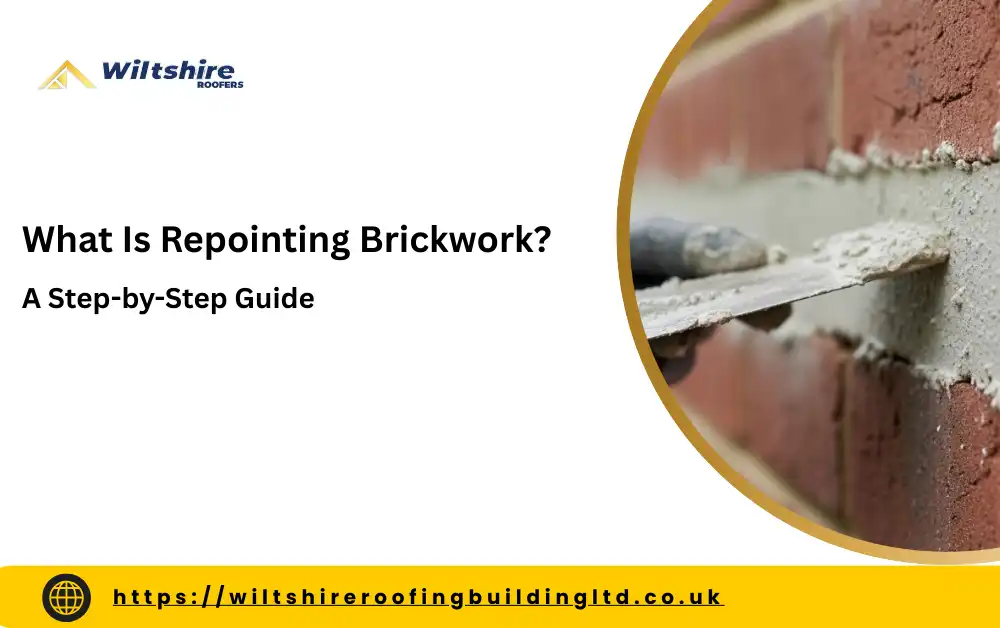
Everyone thinks about how to do repointing of brickwork. So, allow us to share our experience and knowledge. Repointing brickwork is the process of removing old mortar and replacing it with fresh mortar. This helps prevent water from entering your walls and keeps your home strong and safe. When mortar starts to crumble, gaps appear between bricks. This can cause damp and damage to your walls if left unchecked. Repointing bricks fills these gaps and protects your home.
Doing brick pointing also improves the look of your house. A freshly repointed wall looks neat and well-maintained, while preventing bigger problems in the future. As experienced roofers, we will guide you step by step through the process so you can carry out repointing safely, correctly, and with professional results.
Tools Needed for Repointing Brickwork
To repoint brickwork effectively, you will need a few basic tools:
- Pointing trowel – for applying and shaping mortar
- Brick jointer – to smooth and finish the joints
- Bricklaying trowel – for handling the mortar easily
- Two buckets – for mixing and cleaning
- Pail of water – to keep tools and mortar workable
- Premixed sand and cement – for a strong, consistent mortar mix
Once you apply the mortar, let it set for a few minutes before cleaning the joints. Use a soft brush or rag to smooth the surface and remove excess mortar for a neat finish. Having the right tools makes repointing easier, safer, and ensures your walls look tidy.
How to Repoint Brickwork
1. Clear the Wall Area
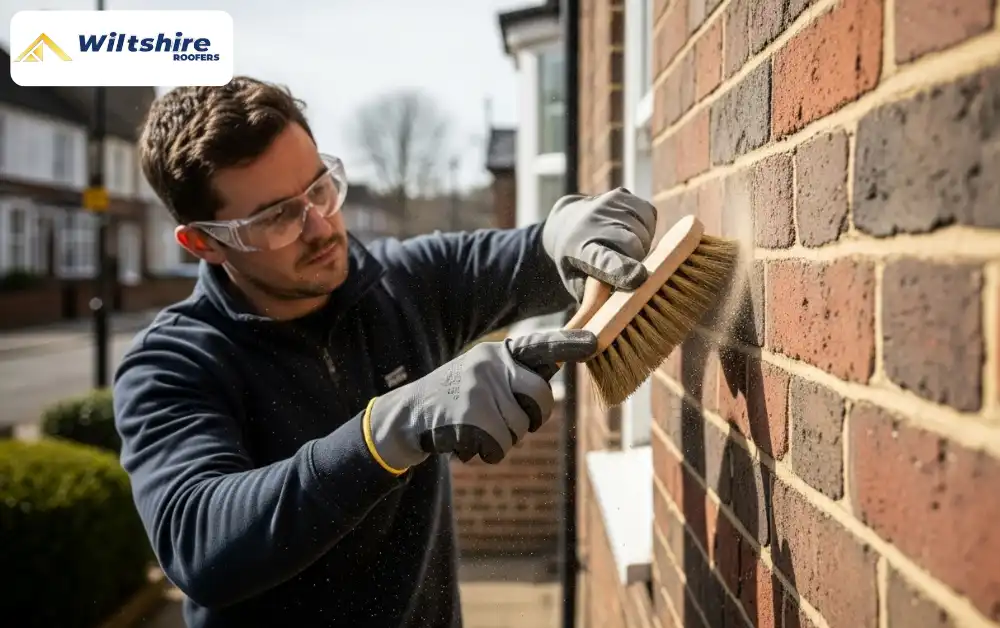
Before starting, remove any dirt, dust, or loose debris from the wall. Make sure the bricks are clean and dry so the new mortar will stick properly. Clear the area around the wall to work safely.
2. Remove Old Mortar
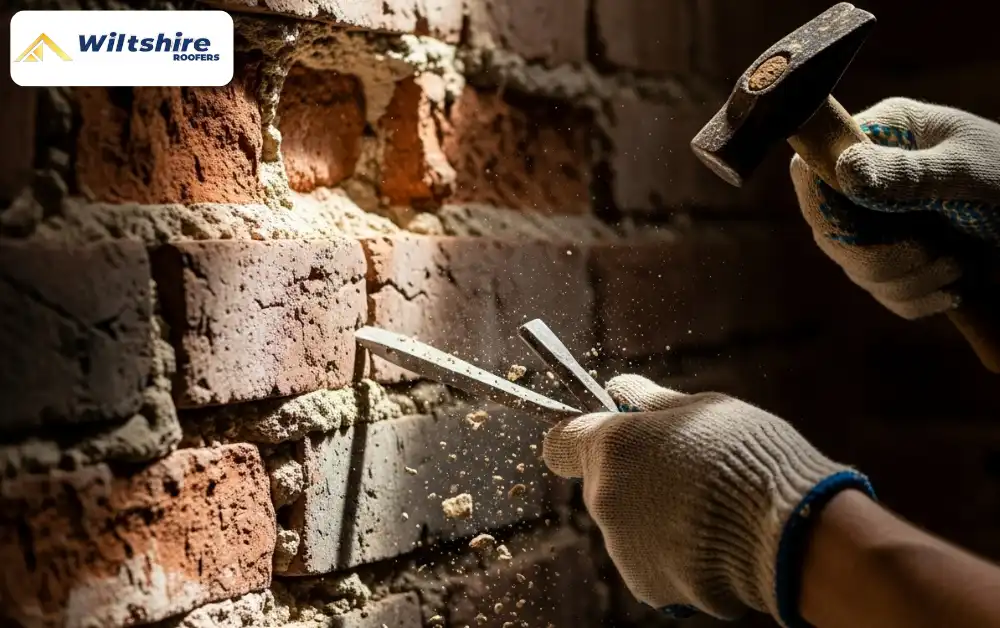
Use a chisel or scraper to carefully remove the old, crumbling mortar from between the bricks. Make sure you remove it down to a solid layer, leaving clean gaps for the new mortar.
3. Work Carefully Around Doors and Windows
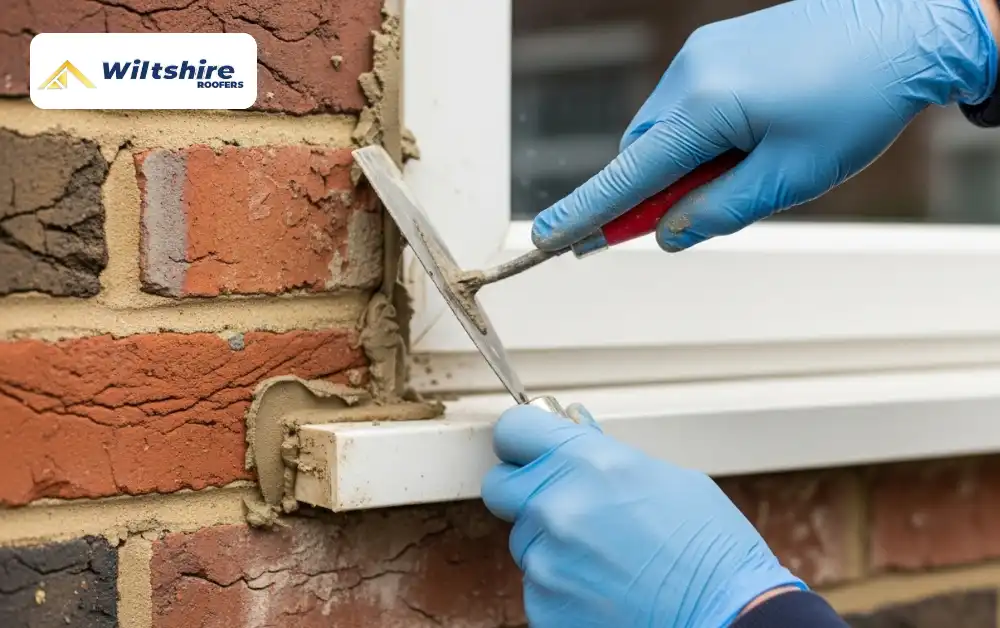
Pay extra attention when repointing near doorways and windows. These areas are more delicate, so remove old mortar and apply new mortar gently to avoid damaging the brick edges.
4. Clean and Expose Brick Edges
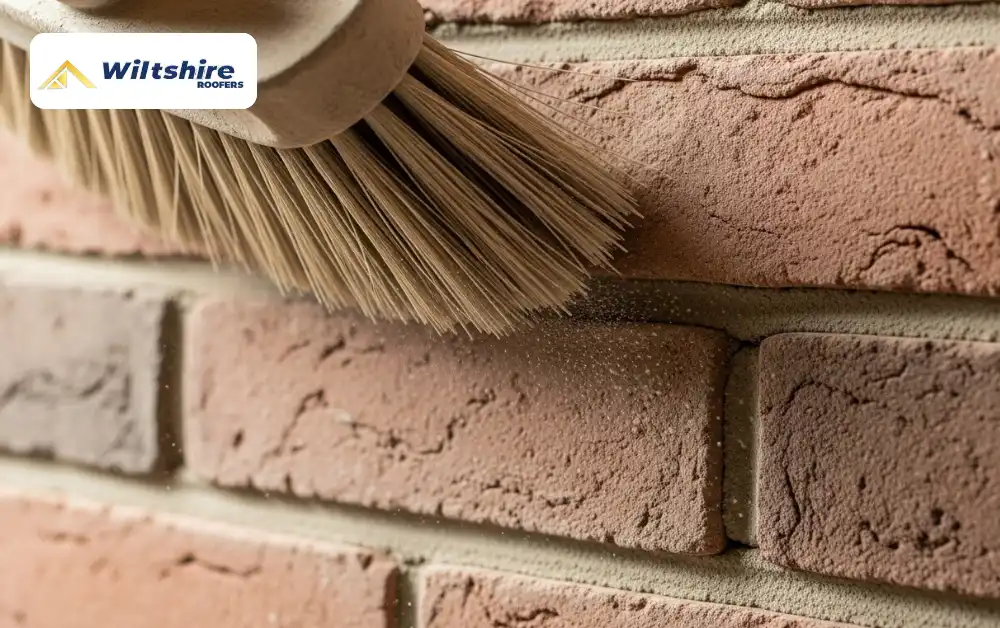
Brush out any dust or small debris from the joints using a soft brush. Make sure the edges of the bricks are clear so the new mortar can bond properly.
5. Remove Dust from Joints
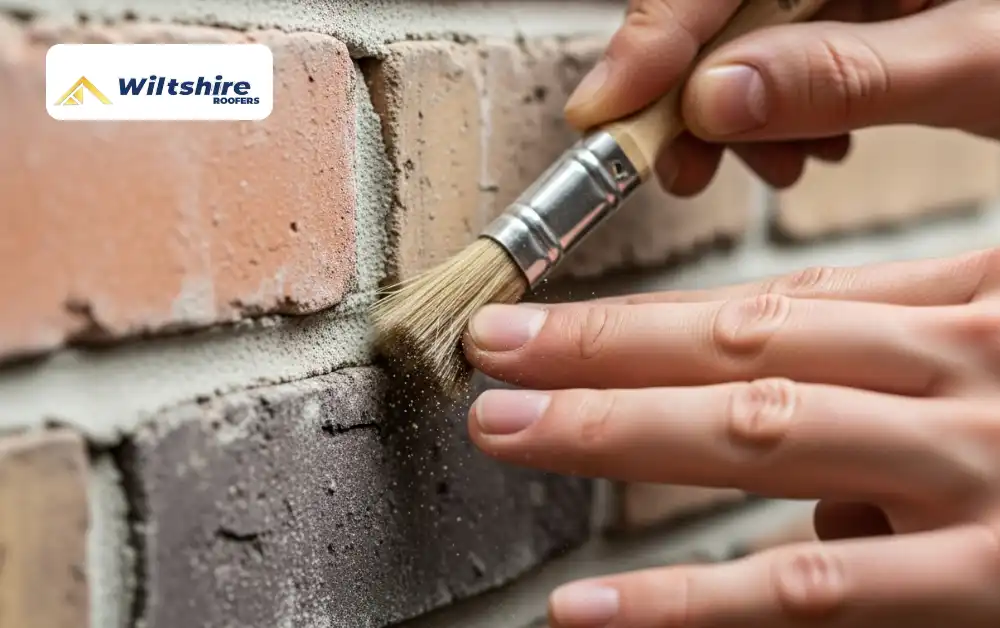
Double-check that the joints are free from dust or loose particles. Even a small amount of dust can stop the new mortar from sticking correctly.
6. Mix the Mortar
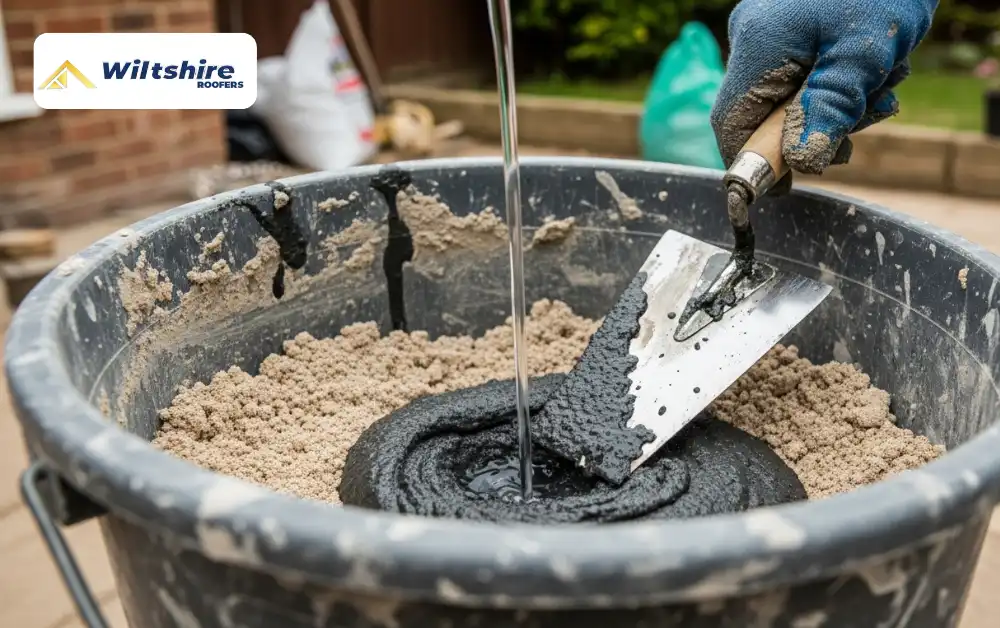
In a bucket, mix your premade sand and cement with water until it reaches a smooth, workable consistency. The mortar should not be too dry or too runny.
7. Start from the Top
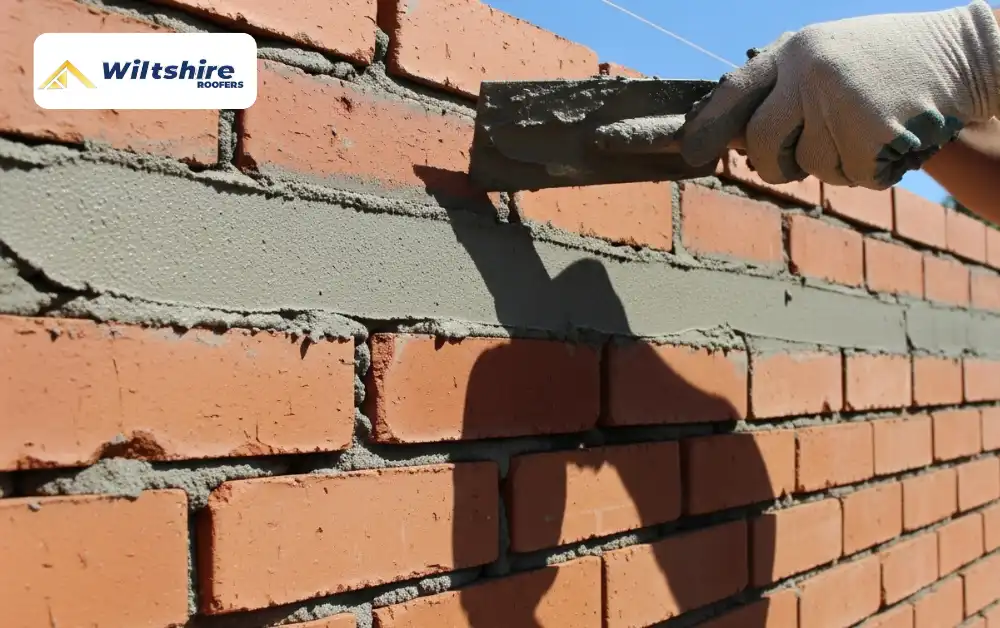
Apply the mortar from the top of the wall down. This prevents old mortar dust from falling onto fresh joints below and keeps the work neat.
8. Fill Vertical Joints
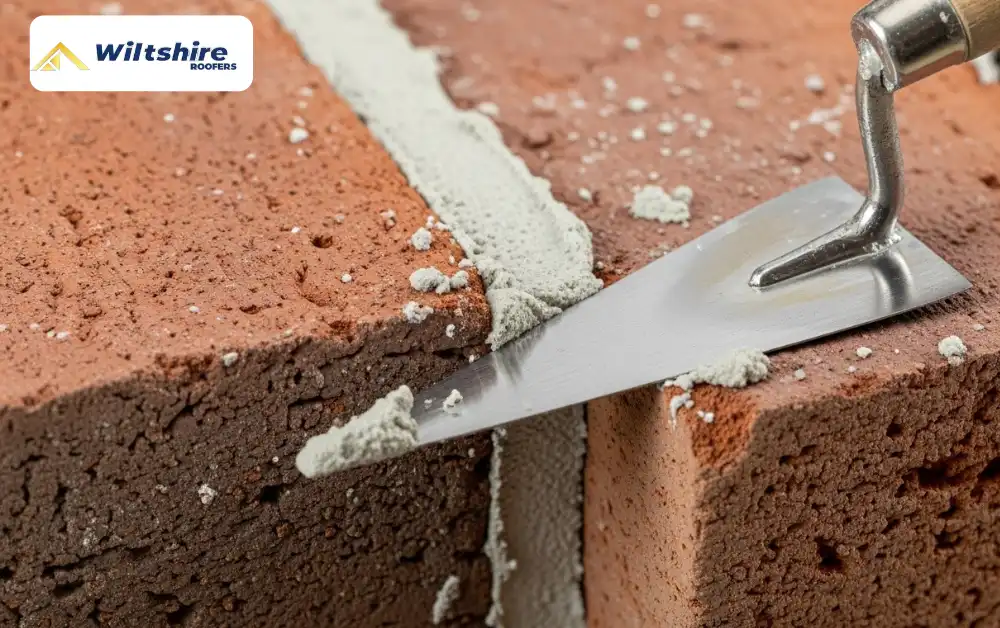
Use a pointing trowel to push the mortar into the vertical joints first. Make sure each joint is completely filled, and the mortar touches the sides of the bricks.
9. Remove Extra Mortar
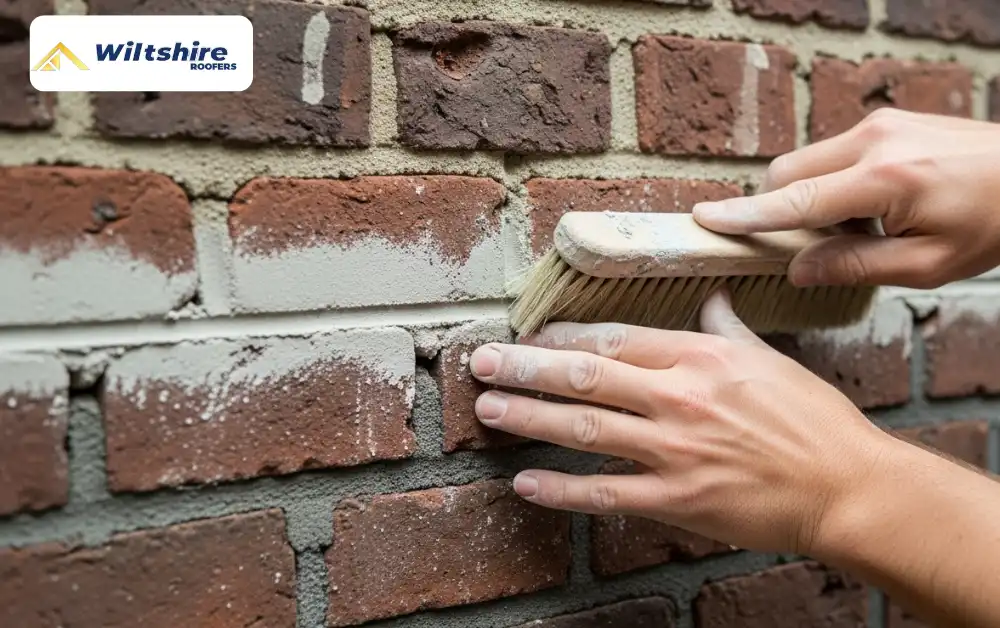
After filling the joints, use a soft brush or rag to remove any excess mortar from the brick surfaces. This gives a neat, professional finish.
10. Check the Finished Work
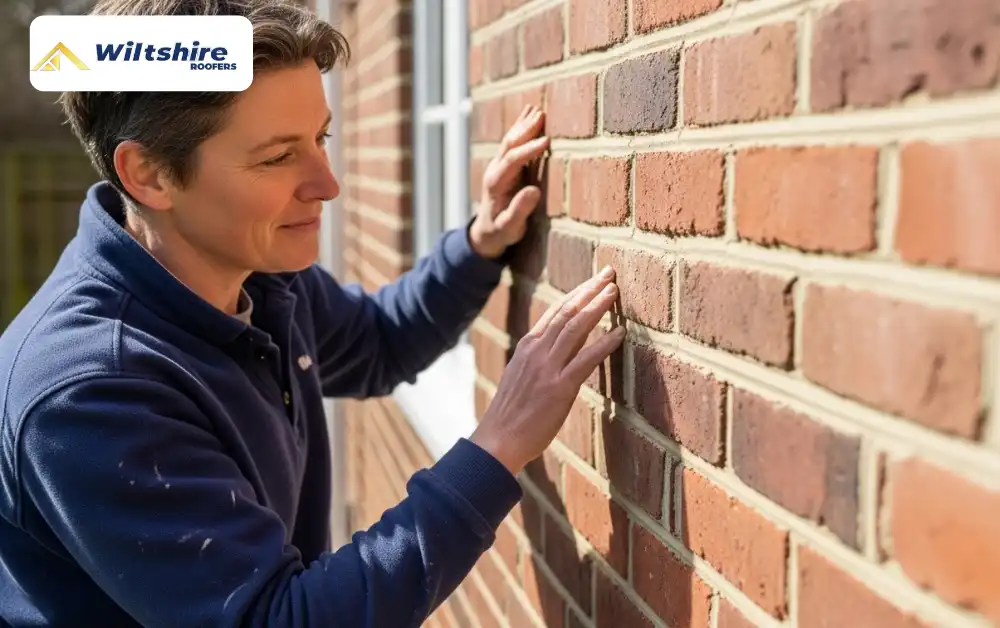
Inspect all joints to make sure they are fully filled and smooth. Make any small adjustments immediately while the mortar is still soft. Let the mortar set completely before touching the wall.
Top Tips for Repointing Brickwork
- Work in dry weather – Mortar sets better when it’s neither too wet nor too cold.
- Do not rush – Take your time to fill joints properly for a long-lasting finish.
- Use the right mortar mix – a balanced sand-to-cement mix ensures strong joints.
- Clean excess mortar immediately – Use a soft brush or rag to keep bricks tidy.
- Start from the top – Prevents dust and debris from falling onto fresh joints below.
- Take extra care around doors and windows – These areas are more delicate and need gentle handling.
- Check joints as you go – Make sure each joint is filled and smooth before the mortar sets.
For more guidance, trust our team of professional roofers who have years of experience maintaining and repairing homes. We also offer professional roofing services to keep your roof in top condition and ensure your property stays safe.
If you are planning larger projects, we offer full repointing services, providing your home withboth protection and style.
Conclusion
Repointing brickwork is an important task that helps protect your home from water damage and keeps your walls strong. Following the correct steps and using the right tools ensures your brickwork stays solid and looks neat.
By taking the time to repoint bricks correctly, you can prevent future costly repointing repairs and maintain the value and appearance of your property.
FAQs
How do you know if bricks need repointing?
You can tell bricks need repointing when mortar is crumbling, cracked, or missing. Gaps between bricks, loose bricks, or damp patches on walls are clear signs. Early action prevents water damage and keeps your brickwork strong and safe.
How much does it cost to repoint brickwork?
The cost of repointing depends on wall size, brick condition, and whether you do it yourself or hire a professional. Using the right tools and mortar mix can save money, while professional work ensures long-lasting results and a neat finish.
How often do bricks need to be repointed?
Bricks typically need repointing every 20–30 years, depending on weather and wall condition. Check for wear regularly. Older homes or exposed walls may require it sooner, while regular maintenance can extend the mortar’s lifespan and protect your property.
Can I repoint a wall myself?
Yes, you can repoint a wall yourself with the right tools, mortar mix, and careful technique. Follow steps like cleaning joints, mixing mortar, and filling gaps. Always work safely and avoid rushing to achieve a strong, neat finish.
