
A leaking chimney can be more than just a minor nuisance, it can silently cause extensive damage to your home if left unchecked. From damp patches on walls and ceilings to mould growth and even weakened timber, water finding its way inside your chimney can affect both the structure and comfort of your property. Many homeowners don’t realise that small leaks can escalate quickly, leading to costly repairs if ignored.
Understanding the cause of the leak and taking timely action with proper chimney leak repair can save both money and stress. Whether the problem lies in cracked mortar, damaged flashing, or a faulty chimney cap, addressing it promptly prevents water from spreading further into your home. For more complex cases or multi-storey chimneys, working with trusted roofers in Trowbridge ensures the repair is done safely and effectively, giving you peace of mind and a chimney that withstands the UK weather year-round.
This guide will walk you through how to identify, repair, and prevent chimney leaks, providing practical steps and expert tips to keep your home dry, safe, and structurally sound.
Common Causes of a Chimney Leak
Knowing why a chimney leak occurs helps determine the right repair approach:
Damaged or Missing Flashing
Flashing seals the joint between the chimney and the roof. Over time, flashing can rust, crack, or detach, creating gaps where water can enter, leading to water leaking inside chimney.
Cracked Mortar or Bricks
Weathering, frost, and age can cause mortar joints to erode and bricks to crack. This can lead to a chimney leaking internally and damage surrounding walls.
Faulty Chimney Cap or Crown
A damaged or missing chimney cap allows rain to run down the inside of the flue, creating internal damp patches and the need for chimney leak repair.
Blocked Gutters Near Chimney
Overflowing gutters near the chimney can direct water toward the chimney base, worsening leaks around flashing or masonry.
How to Fix a Chimney Leak: Steps to follow
Step 1: Inspect the Chimney Thoroughly
Start by examining the chimney inside and out:
- Check the crown and cap for cracks or damage
- Inspect flashing for gaps, corrosion, or detachment
- Look for damp streaks on internal walls
Using a stable ladder or hiring professional roofers in Trowbridge is recommended for multi-storey chimneys. Early detection makes repairing chimney issues easier and safer.
Step 2: Clean the Chimney and Surrounding Roof
Remove moss, leaves, and dirt to ensure sealants or repairs adhere properly. Cleaning also helps identify cracks where water leaking inside chimney may be occurring.
Step 3: Repair Flashing
If the leak originates from flashing:
- Lift shingles carefully around the chimney
- Apply roofing sealant to small gaps
- Replace corroded or damaged flashing
Proper flashing repair helps fix chimney leak issues and prevents water from entering the roof-chimney junction.
Step 4: Repoint or Replace Brickwork
For leaks caused by damaged mortar or bricks:
- Remove old, crumbling mortar
- Repoint with weather-resistant mortar suitable for UK conditions
- Replace severely damaged bricks
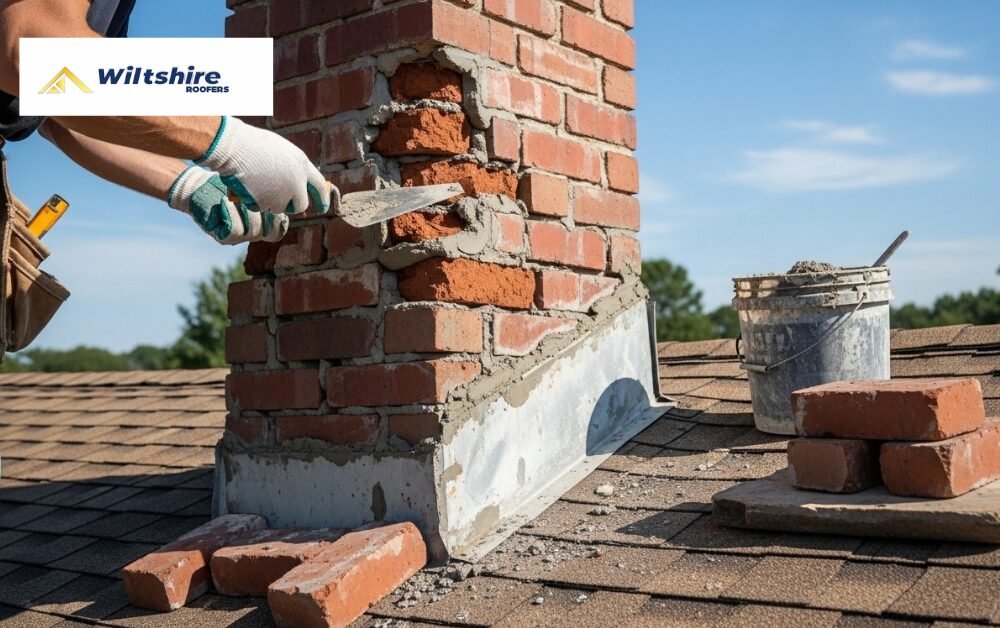
This is a critical part of chimney leak repair, preventing further internal leaks.
Step 5: Repair or Replace Chimney Cap
Inspect the chimney cap and crown for cracks or damage:
- Apply waterproof sealant to minor cracks
- Replace the cap if corroded or missing
- Ensure water is directed away from the flue
A properly fitted cap prevents chimney leaking and protects the masonry from water damage.
Step 6: Inspect Nearby Gutters and Roof
Even if the chimney is sound, leaks can stem from nearby gutters or roof issues:
- Clear blocked gutters near the chimney
- Ensure downpipes direct water away
- Check roof shingles around the chimney base
Preventing water leaking inside chimney in this way reduces damp spreading to walls and ceilings.
Step 7: Apply Waterproofing Treatment
After repairs, a breathable waterproofing sealant on the chimney exterior can provide extra protection:
- Use a masonry-safe, breathable product
- Avoid non-breathable coatings that trap moisture
- Reapply every few years
This enhances chimney leak repair and prolongs the life of the chimney.
When to Call Professionals
Some chimney leaks require professional expertise:
- Multi-storey chimneys or unsafe roof access
- Extensive brick or mortar damage
- Persistent leaks despite DIY repairs
- Chimneys shared by multiple properties
Conclusion
A chimney leaking can quietly damage your home, affecting walls, insulation, and even the roof structure. Acting early with proper chimney leak repair, whether through cleaning, flashing fixes, repointing, or cap replacement prevents costly damage and ensures your chimney stays safe and functional. For lasting results and peace of mind, consider enlisting trusted roofers in Trowbridge, who combine experience and local knowledge to fix chimney leaks efficiently and protect your property for years to come.
FAQs
How do I know if my chimney is leaking internally or externally?
Internal leaks show as damp patches on ceilings or walls, while external leaks appear as cracked flashing, damaged mortar, or water stains on the chimney exterior.
Can I repair a chimney leak myself?
Minor flashing gaps or mortar cracks can be fixed by experienced DIYers, but professional intervention is recommended for high chimneys or extensive damage.
How much does chimney leak repair cost in the UK?
Costs depend on the leak’s source, roof access, and materials, ranging from minor sealant repairs to larger flashing or masonry work.
Does a leaking chimney affect insulation?
Yes, water ingress can damage insulation around the chimney, reduce thermal efficiency, and contribute to mould growth.
How long do chimney repairs last?
With quality materials and proper flashing repair, chimney repairs can last 10–15 years, though regular inspections are recommended.
Can blocked chimney flues contribute to leaks?
Yes, blockages can cause condensation and internal moisture buildup, worsening existing leaks.
How can I prevent future chimney leaks?
Regular inspection, cleaning, waterproofing, and timely repairs of flashing, caps, and brickwork can prevent chimney leaking and reduce the need for frequent chimney leak repair.
