
Repointing is the process of replacing old or damaged mortar between bricks, stones, or blocks. This helps keep your home strong and protects it from water damage and damp. Over time, mortar wears down, making repointing necessary to maintain your property.
You may need repointing on walls, chimneys, or roofs. How much does repointing cost depends on the size of the area, the condition of the brickwork, and the type of mortar used. Smaller jobs usually cost less, while a full house repointing can take longer and cost more.
Understanding repointing costs helps you plan your budget. Whether you are repairing a few bricks or repointing an entire house, knowing typical prices can prevent unexpected expenses and ensure the work is done properly.
Average Cost of Repointing in the UK
Repointing costs vary depending on the type of project and the area being worked on. Brick walls are the most common, with prices usually ranging from £50 to £60 per square metre, including clean-up. Stone walls can be more expensive, especially if the stones are laid irregularly, with costs averaging around £80 per square metre.
Chimneys often need repointing first because they are more exposed to the elements. The cost for a chimney typically falls between £500 and £1,000, plus scaffolding if required. Roofs also need repointing, usually every ten years, with costs ranging from £500 for minor ridge work up to £2,000 for larger repairs or full roof sections.
For single brick walls, smaller areas cost less. A 30m² wall may cost between £600 and £1,500, while a 50m² wall can cost £1,000 to £2,500. Full property repointing is more expensive, with terraced houses ranging from £1,300 to £2,350, semi-detached homes from £1,900 to £4,750, and detached properties from £2,900 to £7,250. Labour costs also vary, typically £25 to £45 per hour depending on the complexity and experience of the tradesperson.
Repointing Cost Per m² (Square Metre)
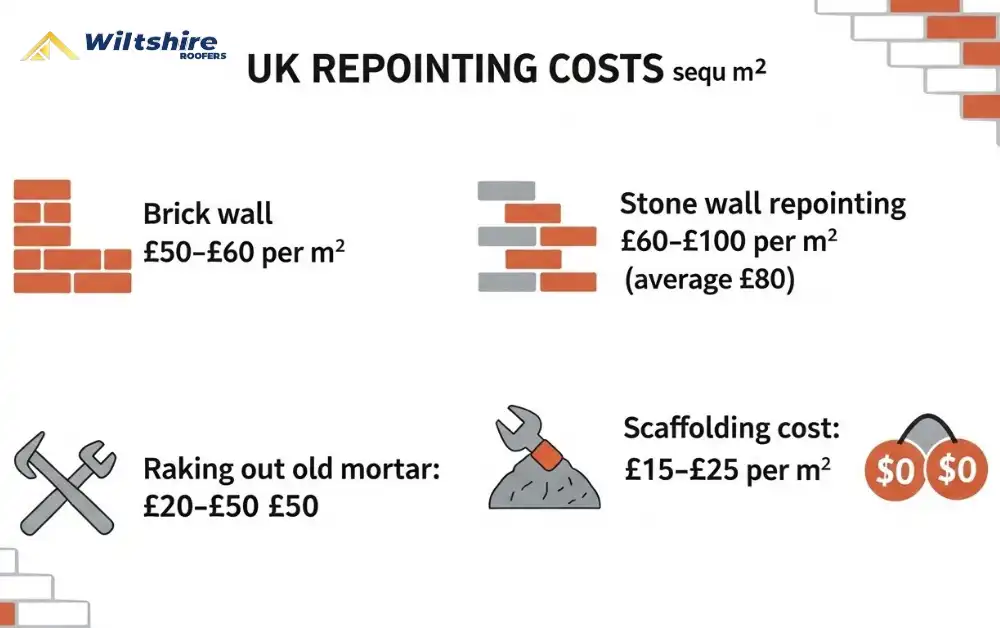
Repointing costs are often calculated per square metre, making it easier to estimate both small repairs and larger projects. For a brick wall, the average cost is around £55 per m², usually ranging between £50 and £60. This price typically includes cleaning up after the work is done.
Stone walls can be more expensive due to irregular layouts or rubble stonework. On average, repointing stone walls costs about £80 per m², with a typical range of £60 to £100 depending on the time and skill required to apply the new mortar neatly.
Raking out old mortar is an extra step that increases the per m² cost. This usually adds between £20 and £50 per m², with an average of about £35. Scaffolding, when required, can also add to costs, generally around £15 to £25 per m², depending on the height and access needed.
Cost of Repointing a House by Property Type
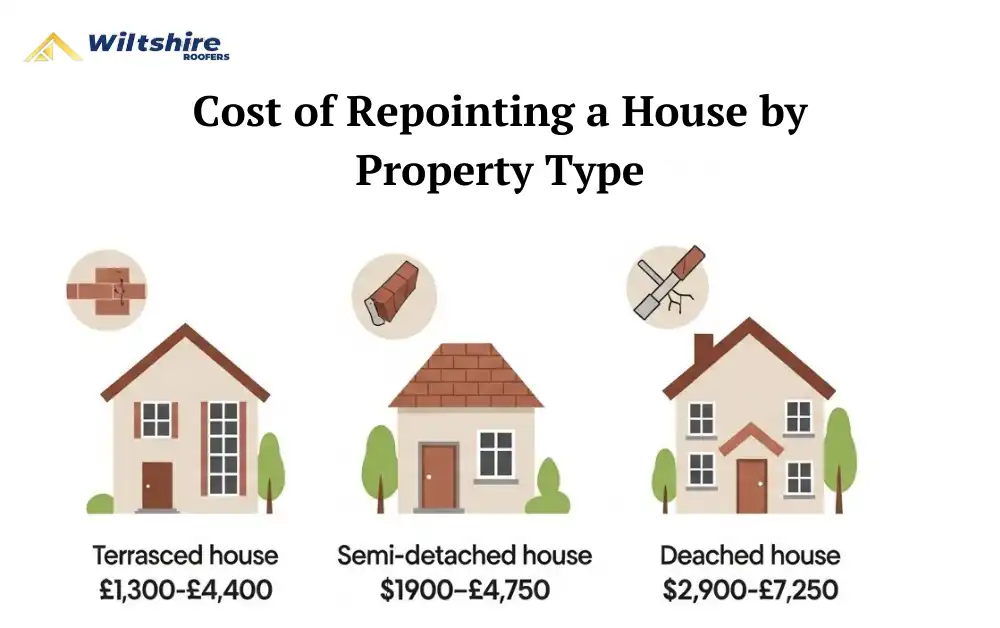
Repointing the exterior of an entire house is a big job. It requires skilled labour, materials, and sometimes scaffolding. How much does repointing cost depends on the size of your home, how easy it is to access the walls, and the condition of the brickwork. Single walls are cheaper, but full exterior repointing takes more time and materials.
Terraced House Repointing Cost
For terraced houses, repointing usually costs between £1,300 and £4,400 for the full exterior. The cost varies depending on the property’s size and the condition of the mortar. Older Victorian terraces may be more expensive due to their brickwork style. Smaller patch repairs on a terraced home cost less, but covering the entire house will naturally increase labour and materials.
Semi-Detached House Repointing Cost
Semi-detached houses generally cost more than terraced homes, with prices ranging from £1,900 to £4,750. The exact cost depends on the number of walls that need repointing and the complexity of the brickwork. Semi-detached homes may require additional scaffolding or access equipment, which also increases the total cost.
Detached House Repointing Cost
Detached houses are the largest and most expensive to repoint. Complete exterior repointing can cost between £2,900 and £7,250. Larger walls, multiple elevations, and sometimes intricate brick designs increase labour time. If scaffolding is needed for high or hard-to-reach areas, this will add to the total price.
Repointing a whole house is always more costly than single-wall repairs, but it protects your property, maintains the structure, and keeps the brickwork looking good. These costs give homeowners a clear idea of how to plan a budget and understand the cost of repointing for different types of homes.
For a trusted repointing service, speak to a skilled local roofer. They can assess your walls, provide a reliable quote, and carry out all repointing work professionally, ensuring your home remains durable and weatherproof.
Factors That Affect Repointing Costs
The cost of repointing can vary depending on several factors. The type of project is important, whether it’s a single wall, chimney, patio, or the whole house. Larger areas or multiple walls naturally require more materials and labour, which increases the total cost.
Raking out old mortar is another key factor. Most repointing jobs require removing the existing mortar to a depth of about 15 mm before applying new mortar. This process usually costs between £20 and £50 per square metre, depending on the amount of work required.
The condition of your masonry also affects costs. Bricks that are chipped, cracked, or damaged by damp may need repairs or replacement. Similarly, the type of mortar matters; cement-based mortar is standard for modern homes, while lime-based mortar is better for older properties. Lime mortar costs more per square metre but helps older walls “breathe” and prevents damp issues.
Scaffolding and access can add to costs if the work is on chimneys, roofs, or upper floors, at a rate of £15 to £25 per square metre. The pointing style also matters; tuckpointing or weather-struck pointing is more skilled and time-consuming than standard pointing, which increases the price. Labour charges typically range from £20 to £50 per square metre, or £25 to £45 per hour. Waste disposal is often included, but sometimes needs to be budgeted separately.
Conclusion
Repointing is essential for keeping your home strong, protecting it from damp, and maintaining its appearance. How much does repointing cost depends on the type of project, the size of the area, and the condition of the brickwork. Small repairs are cheaper, while full house repointing requires more materials, labour, and sometimes scaffolding.
Other factors that affect the final price include mortar type, pointing style, scaffolding requirements, and labour charges. Raking out old mortar, masonry condition, and waste disposal can also impact costs. Understanding these factors helps homeowners plan their budget and ensures the work is done properly.
By understanding average costs and the factors that influence them, you can make informed decisions about repointing your home and keep your property safe, durable, and looking its best.
FAQs
Does scaffolding always increase repointing costs?
Scaffolding is needed for high walls, chimneys, and roofs. It adds to the total cost, usually £15–£25 per m². Single-wall repairs often don’t require scaffolding, keeping costs lower while ensuring safe working conditions.
Is VAT included in UK repointing prices?
Most repointing cost estimates do not include VAT. When hiring a tradesperson or company, confirm whether VAT is added. Including VAT can increase the total cost by 20%, so always check invoices before starting work.
Can repointing be done in stages to reduce cost?
Yes, repointing can be completed in sections, such as front walls first or one elevation at a time. Staging helps spread the cost and makes budgeting easier, though it may slightly extend the total timeline for full property completion.
Do older properties cost more to repoint?
Older homes often need lime-based mortar and more careful brickwork, which increases labour and material costs. Victorian or historic properties can be more complex to access, requiring scaffolding and skilled bricklayers, which can result in higher overall repointing prices.
