

Flat roofs are now much stronger than they used to be, but they still need regular care. If your roof is old or neglected, leaks can develop over time. This is especially true in areas with heavy rain and strong winds. A small leak can quickly become a big problem if left unchecked.
Flat roofs are common on garages, extensions, and many commercial buildings. They are popular because they are simple and cost-effective to build. But the flat design means water can stay on the roof for longer. This is why leaks are more likely to occur on flat roofs than on pitched roofs.
If you notice water stains, damp patches, or dripping ceilings, you need to act fast. Leaks can cause wood rot, mould, and damage to insulation and plaster. A thorough inspection helps you find the real cause of the leak. Once you know the cause, you can choose the right repair method. As experienced roofers, we will explain the main causes of flat roof leaks and how to fix them. It will also give simple tips to prevent leaks in the future. By following these steps, you can keep your roof safe and dry. Read on to learn how to repair a flat roof leak the right way.
Causes of Flat Roof Leaks
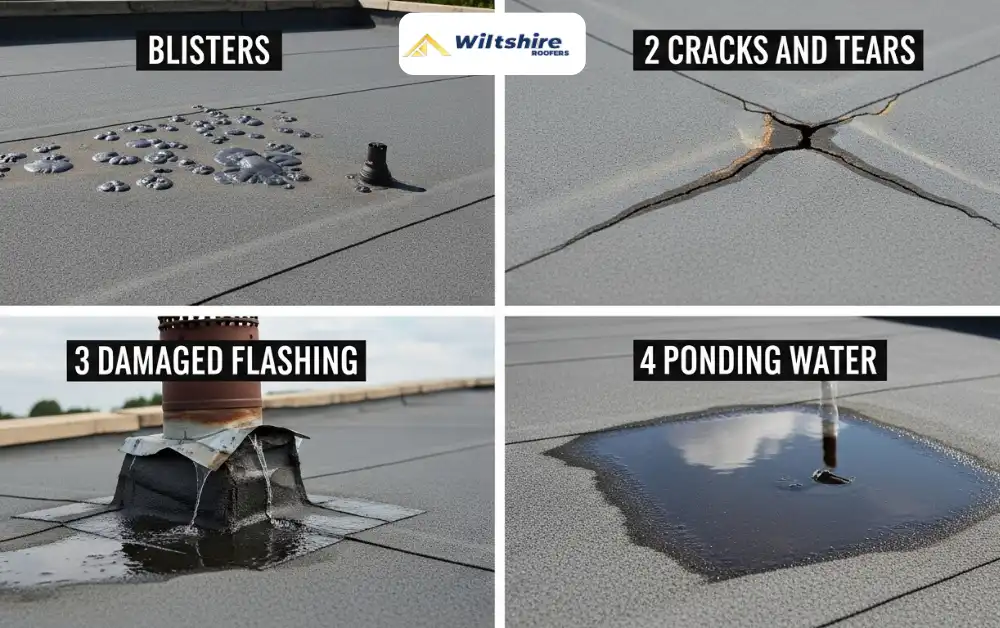
- Age and wear
Over time, roofing materials weaken due to weather and temperature changes. Old roofs are more likely to develop leaks. - Damaged flashing
Flashings seal weak spots around vents, walls, and joints. If they crack or lift, water can get in easily. - Poor installation
If seams, overlaps, or joints are not sealed properly, leaks can form. This is common in poorly fitted roofs. - Ponding water
Flat roofs need a slight slope to drain water away. If water stays for more than 48 hours, it can soak through. - Thermal movement
Roofs expand and contract with temperature changes. This can cause cracks, splits, or blisters. - Blistering and delamination
Water can get trapped under layers, causing bubbles or separation. These weak spots can burst, leading to leaks. - Poor roof design or structure
Low upstands, weak roof deck, or poor drainage can lead to leaks. Structural issues make the roof more vulnerable in heavy rain.
Solutions for Flat Roof Leak Repair
- Find the leak source first
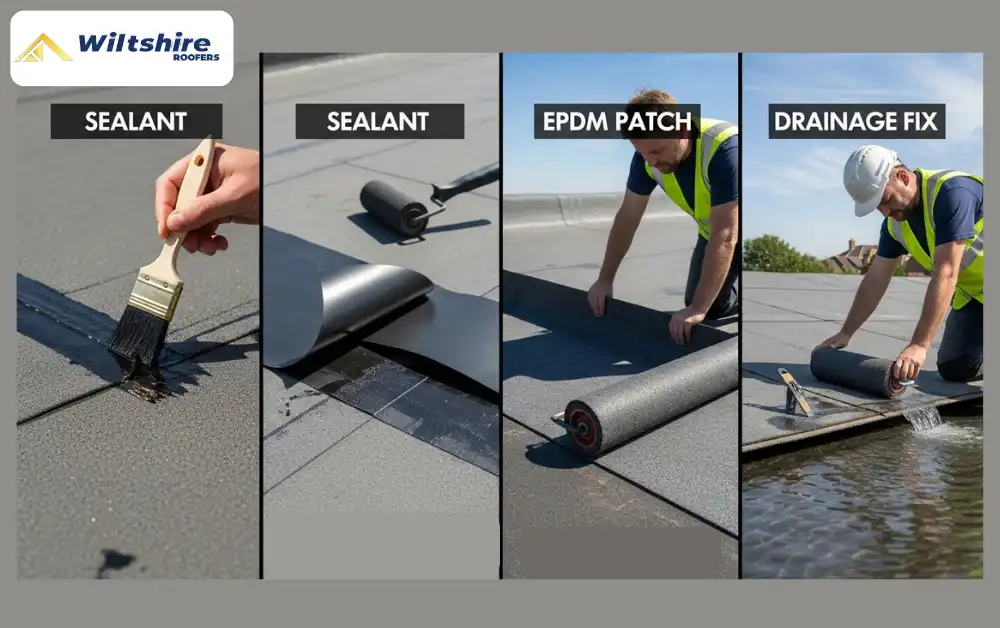
Look for damp spots, water stains, or bubbling on the roof surface. A roof inspection helps avoid fixing the wrong area. - Temporary fix for small leaks
Use a flat roof sealant or waterproof paint to cover the leak. This is best for short-term protection until you can do a proper repair. - Fixing felt roof leaks
Clean and dry the area, then apply two layers of sealant. For bigger damage, use a torch-on felt patch (only if insured). - Repairing EPDM rubber roof leaks
For small tears, use EPDM sealant. For larger holes, use EPDM primer and self-adhesive flashing tape to seal the edges. - Repairing GRP/fibreglass roof leaks
Use a fibreglass repair kit. Clean, sand, apply matting, and finish with a topcoat to match the roof. - Repairing concrete roof leaks
Apply bitumen primer, then bitumen waterproof sealant. For large cracks, add a torch-on felt layer. - Repairing asphalt roof leaks
, lean and dry the area, then use bitumen flashing tape. For multiple cracks, use torch-on felt or asphalt. - When to call a professional
If there are multiple or the roof is old, it may need a full replacement. Always call a roofer for complex or high-risk repairs.
Tips to Maintain Your Flat Roof
- Check your roof regularly
Look for cracks, blisters, or any signs of damage that could lead to leaks. - Fix issues quickly
If you spot damp patches, mould, or water pooling, repair it as soon as possible. - Get a professional check if needed
If you notice sagging, condensation, or repeated leaks, call a roofer for a full inspection. - Keep the roof clean
Remove leaves, branches, and debris to prevent blocked drains and water build-up. - Check roof details and fittings
Look around vents, pipes, and skylights as these areas are common leak spots. - Prepare for bad weather
Before storms, check for low areas where water can collect.
If the leak is small and easy to reach, you may be able to handle the repair yourself using the right materials. However, if the leak is large, there are multiple leaks, or you notice damp patches inside your home, sagging roof areas, or signs of rot, it is safer to hire a professional roofing service. A qualified roofer can fully inspect the roof, identify the root cause, and fix it properly so the problem does not come back.
Conclusion
A leaking flat roof should not be ignored, as small issues can quickly turn into major damage. In many cases, minor leaks can be repaired by yourself using the correct materials, especially if the area is easy to access. However, if the leak is large, there are multiple leaks, or you notice damp patches inside your home, it is best to call a professional roofer.
Regular flat roof maintenance and prompt repairs will help prevent future leaks and extend your roof’s lifespan. If you are unsure about the cause or the repair, getting expert help is always the safest option.
FAQ’s
What is the best way to repair a leaking flat roof?
The best approach depends on the roof type and the extent of the damage. For small leaks, use a suitable flat roof sealant or patch. For larger or repeated leaks, a professional repair or replacement is usually the safest and most long-lasting solution.
Can you repair a flat roof by yourself?
Yes, you can repair small leaks yourself if you know the roof type and have the right tools. However, for large leaks, ponding water, or complex roofing materials, it is safer to hire a professional to avoid mistakes and future damage.
How to stop a flat roof leak in the rain?
During the rain, the best option is a temporary fix. Use a bucket to collect water and clear the area if safe. Apply a quick sealant or waterproof patch once the rain stops, then arrange a proper repair.
Does Flex Seal work on flat roofs?
Flex seal can help as a short-term fix for small leaks, but it is not a long-term solution. It may peel or crack over time. For lasting results, use proper roof repair materials or hire a roofer.
