
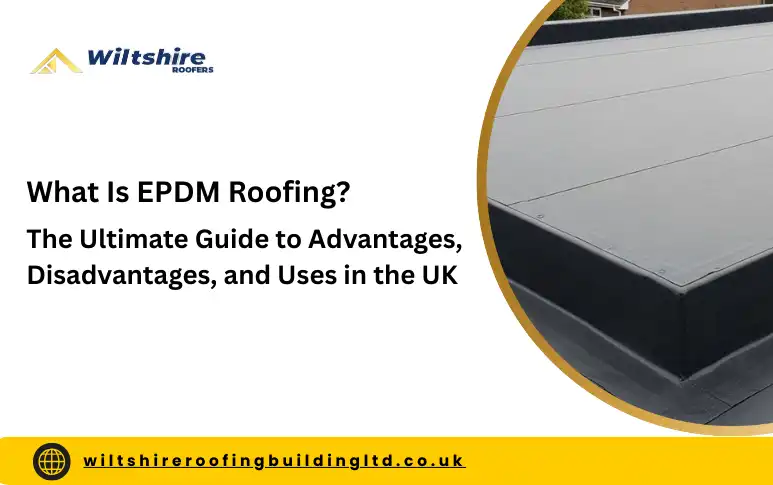
EPDM roofing is a type of rubber roofing mainly used on flat and low-sloped roofs. It is made from a strong, flexible rubber material that keeps water out and protects your property from rain, wind, and the changing UK weather.
At Wiltshire Roofing and Building Ltd, we have completed many projects using EPDM roofing. As experienced roofers, we will guide you through what EPDM is, how it works, and why it is a popular choice for homes and commercial buildings.
What Is EPDM Roofing Made From?
EPDM roofing, also called EPDM rubber roofing or rubberised roof, is made from a synthetic rubber material called Ethylene Propylene Diene Monomer. This material, often shortened to EPDM, is powerful, flexible, and weather-resistant, which makes it ideal for flat roofs and other low-sloped surfaces.
EPDM comes in large sheets, sometimes called EPDM rubber sheets or EPDM membranes, which can cover a whole roof with very few seams. This helps prevent leaks and keeps water out. Because of its durable rubber material, EPDM roofs can handle rain, snow, heat, and UV exposure without losing shape or performance. It’s one of the most reliable flat roofing membranes available in the UK.
Where Is EPDM Roofing Used?
EPDM roofing is highly versatile and is commonly used for a wide range of flat and low-sloped roofs. You will often see it on:
- Flat roofs on homes – perfect for extensions, garages, and porches.
- Commercial buildings – offices, shops, and industrial spaces benefit from its durability.
- Other flat roof areas – garden rooms, carports, and covered walkways.
Because EPDM is flexible and available in large EPDM rubber sheets, it can cover complex shapes and unusual roof layouts with very few seams. This makes it one of the most popular flat roofing membranes in the UK.
How EPDM Roofing Works
EPDM roofing works as a single, continuous rubber membrane that covers the entire roof surface. This creates a strong, waterproof barrier that keeps rain and moisture out.
There are a few ways EPDM can be installed on a roof:
- Fully adhered – the membrane is glued directly to the roof deck.
- Mechanically fixed – fasteners hold the EPDM in place.
- Ballasted – the membrane is held down with stones or other heavy materials.
Because the membrane is flexible, it can expand and contract with temperature changes without cracking. This is why EPDM rubber roofing is so durable and long-lasting, even in the wet and cold UK climate.
Advantages of EPDM Roofing
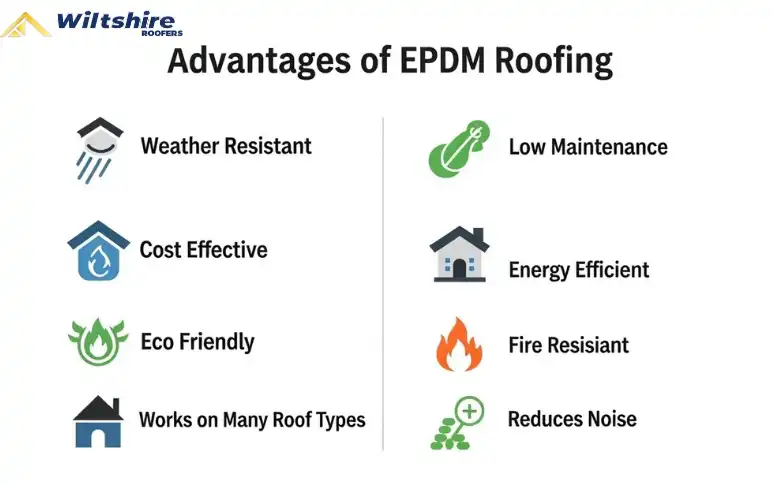
EPDM roofing is popular because it is reliable and long-lasting. Many homeowners choose it for flat roofs because it provides strong protection with minimal upkeep.
One of the main benefits of an EPDM roof is its long life. When fitted correctly, EPDM roofing material can last for decades without cracking or splitting. The rubber material remains flexible, helping it withstand hot summers and cold winters.
EPDM rubber roofing is also fully waterproof. The large EPDM rubber sheets reduce the number of joins, which lowers the risk of leaks. This makes it a trusted choice among modern flat roofing membranes.
Another advantage is low maintenance. A rubber roof made from EPDM does not need regular treatments or coatings. Basic checks and cleaning are usually enough to keep it in good condition.
Because of these benefits, rubber roofing EPDM is widely used on homes, extensions, garages, and commercial buildings across the UK.
Disadvantages of EPDM Roofing
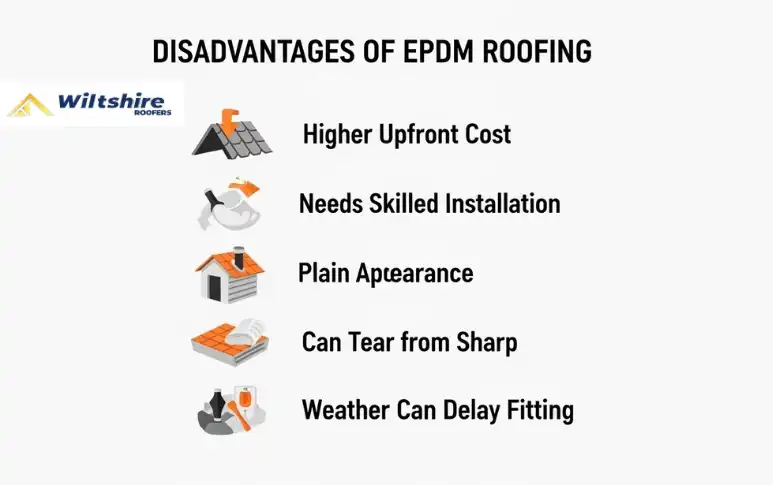
While EPDM roofing has many benefits, it also has a few downsides worth knowing before choosing it for your roof.
One disadvantage of EPDM roofing material is the upfront cost. It is usually more expensive than felt roofing, which can make it less suitable for very tight budgets. However, many homeowners think the longer lifespan makes up for this over time.
Another point to consider is appearance. Most EPDM roofs are black, so options are limited if you want a different look. This does not affect performance, but some people prefer other flat roof materials for visual reasons.
Although rubber roofing is strong, poor installation can cause problems. Issues such as loose edges or water pooling can occur if the membrane is not fitted correctly. This is why getting professional flat roofing services is essential.
Finally, sharp objects can damage a rubber roof if dropped on it or dragged across its surface. Repairs are possible, but care should always be taken when working on the roof.
EPDM Roofing Compared to Other Flat Roof Materials
EPDM roofing is often compared with other flat roofing membranes such as felt, GRP, and PVC. Each material has its own strengths, but EPDM is known for its balance of durability and flexibility.
Traditional felt roofs are usually cheaper at the start, but they tend to wear out faster. Cracks and splits are more common, especially in cold weather. In comparison, an EPDM roof stays flexible and is less likely to fail over time.
GRP roofing has a smooth finish and is very strong, but it can crack if the building moves. EPDM rubber roofing can stretch and move without damage, which makes it more forgiving on flat roofs.
PVC and other synthetic membranes perform well, but they often come with higher costs and more complex installation. For many homeowners, rubber roofing offers a simpler, more reliable option.
Because of this, EPDM is one of the most popular choices for flat roof materials in the UK.
Conclusion
EPDM roofing is a strong and dependable choice for flat and low-sloped roofs. It is made from durable rubber material that stands up well to rain, temperature changes, and daily wear. Because it lasts for many years and needs very little maintenance, it is a popular option for both homes and commercial buildings.
If you are looking for a flat roofing solution that performs well in the UK climate and offers long-term value, an EPDM roof is well worth considering. Consultation from experienced roofers can help you decide if it is the right option for your property.
FAQ’s
What are the common problems with EPDM roofs?
EPDM roofs are strong, but problems can happen if they are not fitted properly. Common issues include loose edges, poor sealing around outlets, and water pooling on flat roofs. Sharp objects can also damage the rubber membrane, though repairs are usually simple.
What does EPDM roofing stand for?
EPDM stands for Ethylene Propylene Diene Monomer. It is a type of synthetic rubber used for roofing. This rubber material is flexible, waterproof, and weather-resistant, making EPDM roofing a popular choice for flat roofs in the UK.
How long does an EPDM roof last?
An EPDM roof can last between 30 and 50 years when installed correctly and properly maintained. The rubber material stays flexible over time and does not crack easily. Regular checks help extend the lifespan and prevent minor issues from becoming bigger problems.
Is EPDM roofing cheaper than other flat roof materials?
EPDM roofing is not always the cheapest option at the start. Felt roofing usually costs less upfront. However, EPDM lasts much longer and requires less maintenance, making it more cost-effective over time than other flat roof materials.
